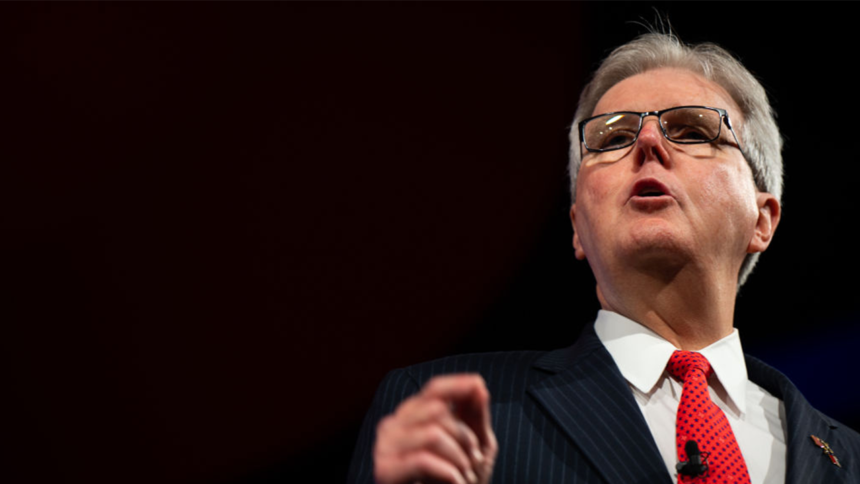
During a recent discussion on “The Claman Countdown,” Mark Malek, Chief Investment Officer at Siebert Financial, addressed the potential advantages of what he termed “Trump Accounts.” This concept gained traction following Texas Lieutenant Governor Dan Patrick’s ambitious proposal to introduce a state-funded initiative offering every newborn in Texas $1,000 invested in the stock market. This idea drew inspiration from a federal plan included in President Donald Trump’s spending bill earlier this year.
Patrick shared on X his rationale behind the initiative, stating, “If I see a great idea from the President that helps Texans, my first question is always, ‘why not do it in Texas, too?'” He noted that with approximately 1,000 babies born each day in Texas, the initiative would create a substantial program expected to serve around 400,000 infants annually. He has committed to making this initiative, dubbed the “New Little Texan Savings Fund,” a priority in the upcoming 2027 legislative session.
The proposed Texas program aims to allocate $1,000 in public funding into stock market investments for each child born in the state. Patrick expressed his support for the concept, stating his enthusiasm for investing in every American newborn. He emphasized that funds from these accounts would be restricted until the child reaches 18, usable solely for educational and approved expenses.
Financially, the program is projected to cost Texas around $400 million a year, amounting to less than 1% of the state’s current two-year budget. Patrick also indicated intentions to amend the state constitution to ensure the program’s permanence, framing it as a beneficial move for families and a means to promote financial literacy through saving and interest.
This proposal comes on the heels of substantial financial backing from Texas billionaires Michael and Susan Dell, who pledged $6.25 billion to support the related federal initiative and extend $250 to each eligible child under ten. Under the federal program, newborns must be U.S. citizens with a Social Security number, born between January 1, 2025, and December 31, 2028, to qualify for the initial $1,000 investment by the U.S. Treasury. Integrating Patrick’s plan could result in each Texas child receiving $2,000, with additional contributions permitted from families under the federal guidelines.
Senator Ted Cruz, who championed the federal initiative, expressed his enthusiasm for Patrick’s proposal, highlighting the potential for this program to cultivate a generation of young capitalists invested in America’s future. Cruz lauded the initiative’s design, allowing contributions not only from families but also from friends, employers, and philanthropic entities.
Conversely, critics have emerged, voicing concerns regarding the expansion of government programs and fiscal responsibilities. The Texas Policy Research nonprofit articulated their opposition on X, arguing that the initiative diverges from principles of personal accountability and kills personal initiative by fostering reliance on state support. The statement underscored a preference for lower taxes and minimal government intervention rather than new spending initiatives that expand governmental reach.
As the conversation around “Trump Accounts” continues to evolve, the focus remains on assessing the proposals’ viability in shaping the financial futures of Texas children while weighing the implications of increased government expenditure.