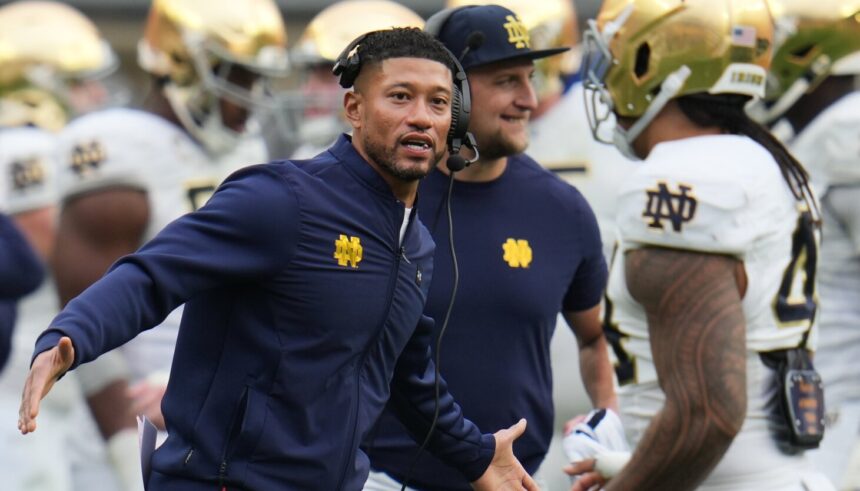
In a season marked by significant discussions surrounding race in college football, Notre Dame’s absence from the College Football Playoff has reignited critical conversations about representation and perceptions within the sport. The omission of the Fighting Irish, especially under the leadership of head coach Marcus Freeman, has raised eyebrows and triggered debates about the underlying reasons behind such decisions.
Historically, Notre Dame has thrived as an independent powerhouse, most notably earning a remarkable $20 million during their previous appearance in the national championship game. However, the increasing scrutiny from NCAA athletic directors, combined with a general disdain from rival schools, is adding layers of complexity to the narrative. For many, the question centers on whether the treatment of Notre Dame is influenced more by the institution’s independent status or the identity of its coach.
Freeman, who is among the limited number of Black head coaches in NCAA football, offers a poignant focal point in this discussion. Despite his successes, there exists a palpable feeling that race may, intentionally or not, be a factor in how the Fighting Irish are regarded within the college football landscape. Meanwhile, a broader sentiment persists: whenever high-profile figures, particularly those of color, experience setbacks, the undercurrents of race and perception invariably come into play.
Statements from sports analysts echo this sentiment, with some suggesting that this season marks a departure from the progress celebrated last year when two Black coaches made significant strides in the College Football Playoff. This season’s shift is attributed, by some, to an inherent bias against Notre Dame—a program often accused of being privileged due to its financial independence from conferences.
Critics argue that the independent status of Notre Dame should not be weaponized as a form of punishment, particularly when a Black coach leads the team. The historical context of race in sports cannot be overlooked, as instances involving prominent Black coaches in college football often highlight a troubling trend of systemic challenges.
The conversation doesn’t simply revolve around logical arguments; it delves into the emotional realm of feelings and lived experiences. Many people wrestle with the conflicting narratives that downplay the impact of race in these discussions, regardless of the facts presented. The insistence that race does not play a role in these instances often feels dismissive, leading to an ongoing struggle for acknowledgment of the complexities of identity in competitive environments.
As the dialogue progresses, the intricate relationship between race, perception, and collegiate athletic success continues to be examined. Whether through theories regarding playoff committee philosophies or the potential of Freeman’s future in coaching, the narrative remains entwined in a broader historical context that fuels both suspicion and skepticism.
In the ever-evolving landscape of college football, the intersection of race and opportunity perpetuates a cycle of inquiry that challenges perceptions, urging stakeholders to reevaluate the frameworks through which success and failure are interpreted. Amid the tumultuous discussions, one truth remains clear: feelings, even when they clash with facts, demand recognition and understanding. The implications of race, identity, and the emotional connections they elicit will undoubtedly continue to shape the narratives of sports for years to come.