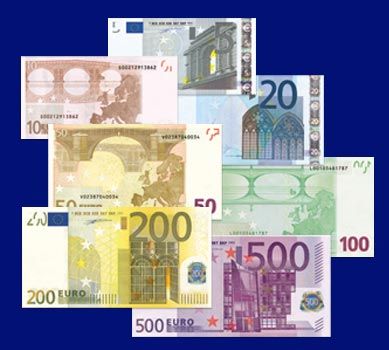
The concept of money, a cornerstone of modern economies, serves as a commodity widely accepted as a medium of economic exchange. It facilitates trade by allowing prices and values to be expressed, circulating anonymously from person to person and across borders. Fundamentally, money has evolved to be the principal measure of wealth, a notion captivating thinkers since ancient times.
Historically, the emergence of paper money can be traced back to China over a millennium ago. Its popularity grew in the late 18th and early 19th centuries, spreading throughout the globe. In contrast, metal as a form of money has origins extending to ancient Babylon prior to 2000 BCE. However, the standardization of coins as a reliable medium of exchange only became commonplace in the 7th century BCE, credited primarily to Croesus, the king of Lydia in Anatolia.
The intrinsic value of money lies in its acceptance as a social construct. The perception that it can be redeemed for goods and services is what endows money with its worth, rather than the physical characteristics of its form. This principle hinges on a shared belief among individuals that others will also accept money, effectively making the denominations—be it a dollar, euro, or yen—valuable in everyday transactions. The strength of this social contract is what allows governments to manage currency, including inflating its value during times of war or economic crises. However, significant devaluation or loss of confidence can lead communities to revert to alternative forms of trade, as seen in post-World War II Germany, where items like cigarettes became mediums of exchange in the absence of stable currency.
In countries suffering from hyperinflation, such as Argentina and Russia, foreign currencies like the U.S. dollar often gain traction as preferred mediums of exchange due to their stability and widespread recognition. These adjustments reflect a broader understanding of the functions that money serves—including providing the ability to separate buying from selling and facilitating trade without the cumbersome need for barter, which requires a double coincidence of wants.
The practical application of money’s functions is illustrated poignantly through Germany’s experience after World War II. Following the implementation of strict price controls by occupying forces, the value of paper money plummeted, leading to a breakdown in trade and widespread reliance on barter systems. The subsequent currency reform in the late 1940s marked a turning point, establishing a stable monetary system that ignited the nation’s economic revival.
Over time, the items accepted as money have varied widely, influenced by cultural customs and experiences. From cowries and whale teeth to more modern substitutes like tobacco, the items that serve as money evolve but retain a common purpose—shared acceptability. Historical developments in money usage illustrate a pattern of innovation, showcasing society’s adaptability and resilience in establishing systems of trade and value.