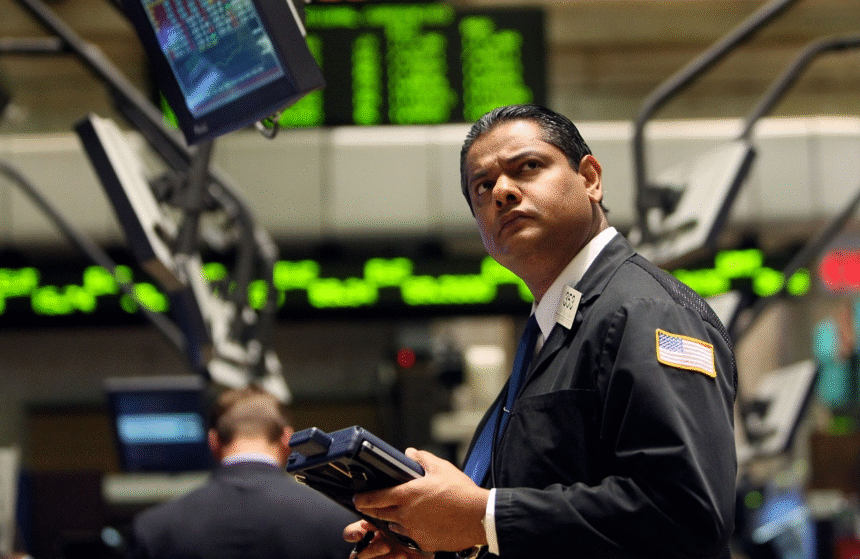
Since early 2019, Wall Street has experienced a remarkable run of record-closing highs, with major indexes frequently reaching unprecedented levels. This impressive upward trajectory was briefly interrupted by the abrupt COVID-19 crash in early 2020 and a nine-month bear market in 2022. However, the prevailing bullish sentiment that has characterized the market may now be on the brink of a shift.
As of the latest trading session, the tech-heavy Nasdaq Composite has officially entered correction territory, registering a decline of 10.7% from its most recent all-time closing high. The Dow Jones Industrial Average and the S&P 500 are not far behind, with pullbacks of 8.4% and 7.1%, respectively, from their peak values.
Market analysts are advising investors to take note of several critical factors as the volatility on Wall Street escalates, particularly affecting the Nasdaq Composite. One stark reality for investors, especially those who are newer to the market, is the tendency for major stock indexes to rise gradually while experiencing sharp declines in adverse conditions. This pattern suggests that the Nasdaq, having risen swiftly in the past, may be poised for a more precipitous fall.
Several headwinds have been identified as contributing to the current market correction:
-
High Valuations: Current valuations, as measured by the Shiller Price-to-Earnings Ratio, indicate that stocks are historically expensive.
-
Inflation Concerns: A spike in inflation is expected, which has been attributed to geopolitical tensions, notably arising from the recent conflict in Iran.
-
Trade Policy Uncertainty: Ongoing uncertainties surrounding tariffs and trade policies continue to create friction in the market.
-
AI Bubble Risks: Analysts are expressing caution over the potential formation of a bubble within the artificial intelligence sector that could burst.
-
Federal Open Market Committee Division: Significant disagreement within the Federal Open Market Committee raises concerns about future monetary policy direction.
Indicators suggest that the situation for the Nasdaq Composite may worsen before it improves. However, historical data provides a counterpoint, indicating that stock market corrections, bear markets, and crashes tend to be short-lived. Research from Bespoke Investment Group has tracked S&P 500 bull and bear markets dating back to the Great Depression. Analyzing this data reveals that the typical S&P 500 bear market lasts approximately 286 calendar days, with none lasting longer than 630 days. Conversely, bull markets enjoy a much longer lifespan, averaging 1,011 days.
Corrections in the stock market often present a unique buying opportunity for long-term investors. Historically, the S&P 500 has never shown negative 20-year total returns since its inception, and 94% of rolling 10-year periods have been profitable. For investors with a longer time horizon—typically five years or more—capitalizing on market corrections could enhance their potential for substantial future gains, regardless of how long a correction or bear market persists.
Investors eager to seek value amid the current correction may want to explore opportunities in the tech software or financial sectors, where they can find stocks potentially undervalued due to the broader market’s high valuation levels.
It’s vital for potential investors to conduct thorough research before making decisions. A particular team has highlighted ten stocks as prime investment opportunities, which notably excludes those within the Nasdaq Composite Index. The performance of previously recommended stocks demonstrates the potential for significant returns, suggesting that discerning investors may benefit from careful selection aligned with market conditions.