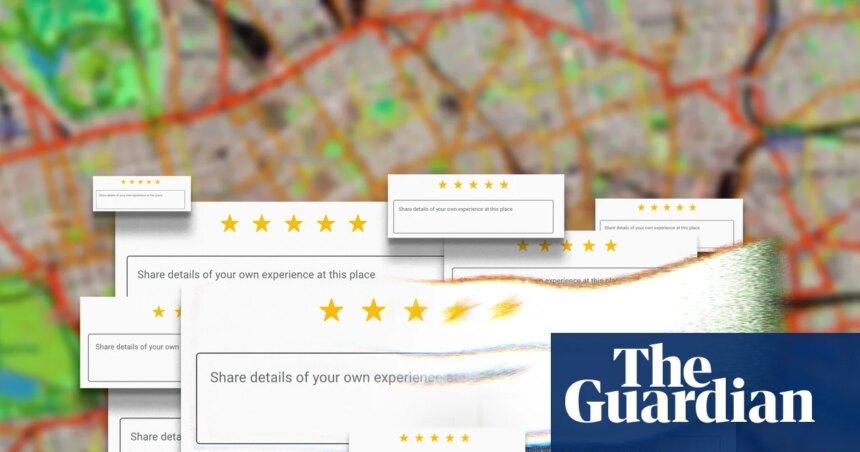
In a revealing exploration of the dark underbelly of online scams, an individual unwittingly found themselves drawn into a scheme that involved writing fake reviews for various hotels and accommodations across Europe. What began as a seemingly harmless gig offering financial rewards quickly unraveled into a complex tapestry of deceit, highlighting a troubling trend affecting the integrity of consumer reviews in the digital marketplace.
The experience commenced with an enticing offer from an account named “Sharon Roberts” on the messaging platform Telegram. Although the individual never actually visited the advertised holiday accommodation near the Roman ruins of Pompeii, they engaged in writing glowing five-star reviews as part of a fraudulent operation. This pattern extended to numerous well-known hotel brands, with requests for reviews echoing from multiple locations including Genova, Naples, and Brussels. The promise of earning up to £800 a day lured the individual deeper into this world, posing pressing questions about the legality and ethical implications of such endeavors.
The recruitment process was orchestrated methodically, involving multiple personas. Following “Sharon,” the individual was introduced to a so-called “receptionist” named Victoria Castillo, who helped set up a cryptocurrency wallet for payment. Victoria, whose images bore an uncanny resemblance to faces found on several adult websites, claimed to be operating from New York while her true location remained an enigma. This multilayered operation underscores the growing division of labor among scammers, who often collaborate to execute their schemes efficiently.
Fraud experts highlight that the proliferation of online scams has advanced significantly in recent years, thanks in part to new technologies that allow criminals to emulate reputable businesses convincingly. The scams are often conducted from regions with weak regulatory environments, increasing the challenges in tracing their origins or counteracting their methods.
Responses from legitimate hotel brands involved in the operation indicated a complete disconnection from the fraudulent activity, asserting they were unaware of the fake reviews being generated under their names. They pledged to take appropriate action to address the matter, underscoring the seriousness with which they regard customer review integrity.
The fraudulent operation, boasting nearly 17,000 subscribers on a Telegram channel that impersonated a legitimate marketing agency, outlined a steady stream of tasks promising monetary rewards. Workers were initially offered $5 per fake review, alongside tasks that involved sending and receiving cryptocurrency as part of a supposed business transaction—a financial maneuver laden with risk and potential for exploitation.
Investigations into the volume of such scams reveal a staggering financial impact on consumers. The UK’s Competition and Markets Authority estimates that fake product reviews cost British consumers between £50 million and £312 million annually, not including service-related scams. This burgeoning industry thrives on the backbone of consumer trust, a commodity that is becoming increasingly difficult to maintain in the age of digital transactions.
Unfortunately, the experience culminated in an attempt to extract more money from the individual as part of a broader scam strategy, akin to schemes that employ manipulative tactics to draw victims into larger financial commitments.
As the landscape of online scams evolves, experts warn that consumers and businesses alike must remain vigilant. The increasing use of cryptocurrency in fraudulent schemes complicates the challenge of tracking illicit activity, as criminals capitalize on the anonymity offered by digital transactions. As skepticism towards online reviews grows, the need for robust measures to ensure their authenticity becomes ever more critical.
By delving into this shadowy world, the experiences of one individual shed light on the complexities and consequences of a burgeoning online scam industry that threatens to undermine consumer confidence and safety in digital marketplaces.