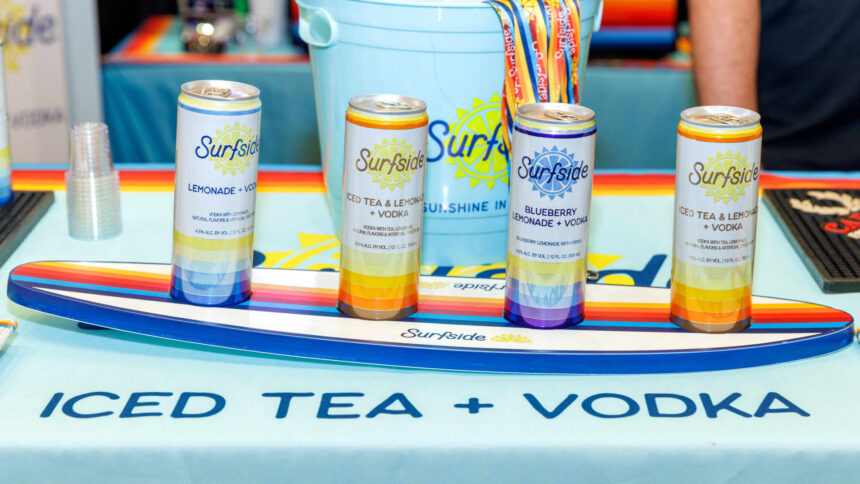
At CinemaCon 2026 held at Caesars Palace in Las Vegas, a notable shift in beverage consumption trends was on display, particularly the decline of carbonated drinks like LaCroix and the rise of non-carbonated options such as Liquid Death and Surfside Iced Teas. This transition is largely attributed to changing consumer preferences, especially among Generation Z, which has increasingly gravitated toward still beverages.
Randy Burt from AlixPartners observed that the landscape of beverage consumption is moving away from fizzy drinks, indicating a marked decline in the popularity of hard seltzers. Data from market research firm Circana reveals that malt-based seltzers like White Claw saw a volume decrease of 1.1% in the year leading up to April 26. Conversely, ready-to-drink premixed cocktails experienced a remarkable increase in volume by 46.4%, highlighting the growing demand for non-carbonated beverages.
The evolving tastes of Gen Z are reshaping the alcohol market. While millennials previously drove the popularity of seltzers, younger consumers now prefer diverse, innovative offerings without carbonation. Scott Scanlon, an executive from Circana, noted that Gen Z demonstrates a willingness to try new products, unlike older generations who tend to stick with familiar brands. This trend is evident as non-carbonated alcoholic drinks, such as Surfside and BeatBox, begin to claim market share from traditional hard seltzers.
Surfside Iced Tea, introduced by Stateside Brands in 2022, is a prime example of this shift. The brand quickly rose to prominence, becoming the fastest-growing alcohol brand in the U.S. by 2024, driven by consumer fatigue with carbonation. Co-founder Clement Pappas highlighted that many of Surfside’s customers, particularly women, prefer fizz-free options to avoid unpleasant side effects like bloating.
Additionally, well-established companies are responding to the trend. Boston Beer, the owner of Twisted Tea, launched a competing drink, Sun Cruiser, aiming to capture the growing market share currently held by Surfside. The competitive dynamics in the non-carbonated alcoholic beverage segment are intensifying, particularly as brands like Cutwater and BuzzBallz also report significant growth.
On the non-alcoholic front, while some carbonated products still thrive, there is evidence of a shift. Brands like Celsius have begun expanding their non-carbonated lines to cater to growing consumer interest in wellness. Celsius’s Chief Brand Officer, Kyle Watson, noted that their non-carbonated offerings have gained popularity for being easier to consume with meals, contrasting with the feeling of bloating that can accompany fizzy drinks.
Canned non-carbonated beverages are becoming more mainstream, changing the traditional association of aluminum cans with carbonated drinks. As consumer preferences evolve, companies such as Liquid Death have successfully marketed still water in cans, rebranding it as a cool and appealing choice. This strategy has opened doors for new non-carbonated drinks to enter the market, with many consumers now viewing cans as the preferred packaging.
Overall, the beverage industry is witnessing a significant transformation. As consumer preferences shift towards healthier, still options, the once-dominant reign of carbonated beverages appears to be loosening, paving the way for a new generation of drink choices that prioritize flavor and wellness without the fizz.