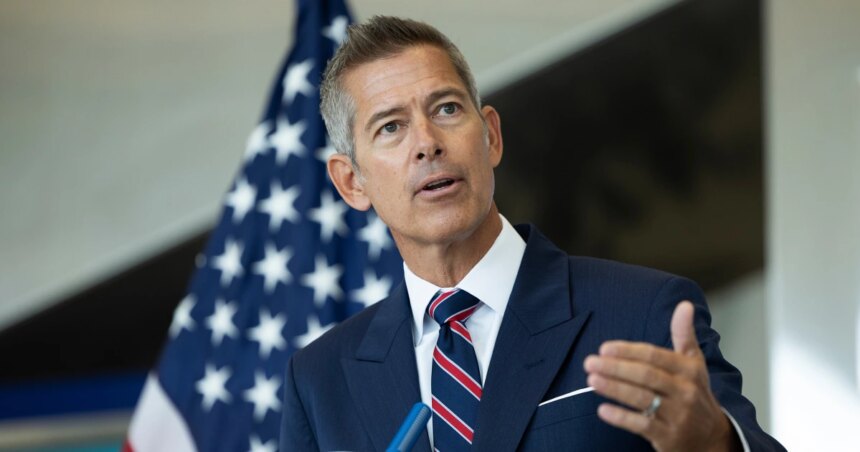
Transportation Secretary Sean Duffy has issued a stark warning regarding air travel in the lead-up to the holiday season, predicting significant disruptions as the U.S. grapples with federally mandated flight reductions. Speaking on CNN’s “State of the Union” with Jake Tapper, Duffy stated, “It’s only going to get worse,” as the nation faces the impact of flight cancellations designed to alleviate pressures on air traffic control operations.
The FAA’s flight reductions, which began on Friday, were necessitated by ongoing shortages of air traffic controllers amid a protracted government shutdown. Though these air traffic controllers are essential workers and must continue to operate during the shutdown, they are not being compensated for their work, adding strain to an already burdened system. Duffy pointed out that a significant number of travelers will be affected, with many potentially missing celebrations with family due to extensive travel delays.
As of Sunday morning, data indicated that over 4,200 flights had been delayed and approximately 1,520 canceled as a consequence of the FAA’s actions. Duffy highlighted alarming staffing issues, revealing that on Saturday alone, there were 81 occurrences requiring modifications to operations due to inadequate staffing. Notably, 18 out of 22 controllers scheduled in Atlanta were absent.
The flight cancellations represent a 4% reduction in overall air capacity this weekend and are anticipated to escalate to 6% by Tuesday, 8% by Thursday, and reach up to 10% by Friday. This systematic reduction aims to mitigate the pressure on the air traffic control system, but Duffy acknowledged that it might also lead to increased delays as traffic is slowed down in response to staffing shortages.
Despite the challenges, Duffy reassured the public about the safety of air travel during this tumultuous time, asserting that efforts are being made to ensure travelers’ safety. “We’re working overtime to make sure that it is safe to travel,” he stated. He explained that if any staffing triggers are identified within the airspace, the response will include slowing traffic, which, in turn, may lead to increased delays and potential flight cancellations.
As the situation unfolds, Duffy remained apprehensive about the future and stressed the importance of resolving the governmental impasse. He underscored that voting to reopen the government is crucial to restoring normal operations. “Next Friday, it’s going to be at 10% to reduce the pressure on controllers,” he noted, expressing concern over the ongoing issue of controllers failing to report for duty. “And so the pressure goes back up again,” he concluded, emphasizing the need for an immediate resolution to the ongoing crisis.