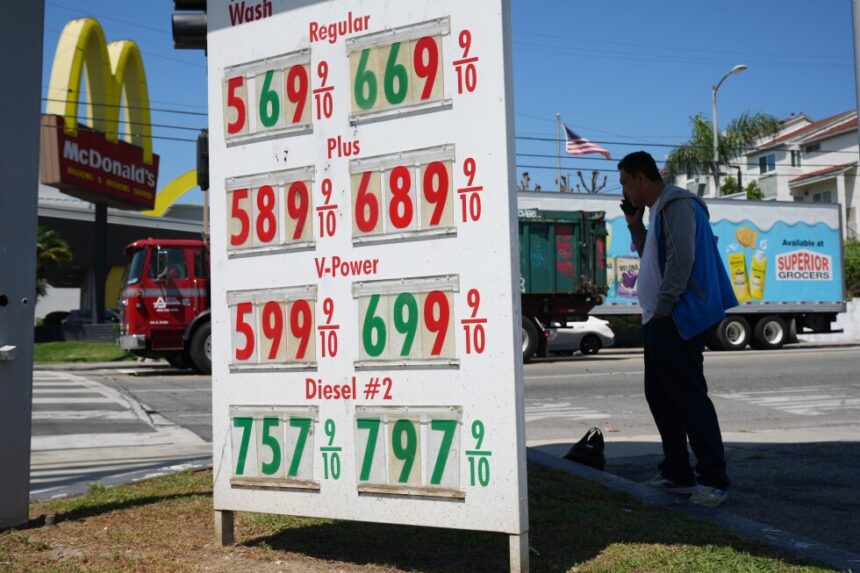
As gas prices continue to surge nationwide, driven by geopolitical tensions such as the ongoing conflict in Iran, drivers are increasingly searching for savings at the pump. Junelle Lewis, a resident of the Seattle area, has turned to the Tulalip Reservation, located just north of the city, where fuel is considerably cheaper than in her hometown. Filling up her Chevrolet Suburban at the Tulalip Market for $4.84 a gallon—approximately 75 cents less than local prices—Lewis shared her frustration with rising costs, attributing her visit specifically to finding affordable gas.
Lewis is not alone in her quest for lower fuel prices; many drivers have found that Native American reservations often offer some of the most competitive rates. Tribally owned stations, particularly in states like California, New Mexico, New York, Oklahoma, and Washington, can sell gasoline at reduced prices compared to off-reservation competitors, a situation made possible by tax exemptions that apply to these lands.
Mobile apps such as Gas Buddy have made it easier for consumers to locate cheaper gas, with national averages rising above $4.15 per gallon following the Iran war that began on February 28. While prices reached over $5 in summer 2022, ongoing geopolitical tensions suggest that costs may continue to rise, contributing to inflationary pressures.
Across the United States, nearly 500 tribally owned convenience stores with gas stations exist, with significant numbers in California. For example, at the Chukchansi Crossing Fuel Station & Travel Center, gas was priced at $5.09, which is 60 cents less than nearby stations. In New Mexico, Jamie Cross noted lower prices on the Mescalero Apache Reservation, where fuel was available for as little as $3.79 a gallon.
The significant price differences are primarily attributed to a legal framework that exempts Native American tribes from state fuel taxes. While federally mandated taxes are still applicable, state governments generally cannot levy taxes on Native Americans operating on their lands due to longstanding legal precedents. This unique situation affords these tribal businesses a competitive edge when it comes to fuel costs.
Numerous factors affect fuel taxation on tribal lands, stemming from complex agreements and varying state and federal rulings. A notable ruling from the U.S. Supreme Court in 2005 allowed for taxation on some fuel sales to tribes, while a subsequent ruling in 2019 reinforced certain tax exemptions, particularly for the Yakama Nation in Washington.
However, gas sales are not the sole revenue stream for tribal businesses. Convenience stores also provide essential grocery items, often filling gaps in “food deserts” where residents have limited access to supermarkets. These establishments serve as vital community resources, providing affordable food and household items. Matthew Klas, a consultant specializing in tribal businesses, pointed out that many tribes use profits from gas sales to fund vital community services such as healthcare, education, and infrastructure.
In addition to fuel and food, tribal businesses are diversifying their services, offering amenities like drive-through smoke shops, car washes, and even casinos, which further bolster their economic contributions. On the Tulalip Reservation, rising gas sales are being reinvested back into community development, underscoring the broader social and economic role that these businesses play in enhancing the quality of life for residents.
As community members navigate the rising costs of diesel and gasoline, many express gratitude for the lower prices they find at tribal stations. Customers like Todd Hall appreciate the more affordable rates, even while lamenting the overall high cost of fuel. In contrast, others, like Jared Blankenship, expressed exasperation over the necessity of gas purchases, especially following the recent loss of his electric vehicle.
Overall, the combination of tax exemptions, community-focused business practices, and competitive pricing has established tribally owned gas stations as critical players in the ongoing search for affordable fuel amid rising national prices.