The recent decision by the Trump administration to impose a substantial $100,000 fee on H-1B visas has stirred significant unease among employers, students, and workers across the globe, particularly affecting those with ties to both the United States and India. The announcement, made late last week, means that the new fee took effect within a day, leading to confusion and apprehension among stakeholders. In response to the widespread concern, the White House has attempted to clarify that the fee will not affect current visa holders and that employees traveling abroad will not find themselves unable to re-enter the U.S. without paying this hefty price.
Despite these reassurances, some legal experts suggest that many are advising their H-1B employees to avoid travel until the situation becomes clearer. Leon Rodriguez, a partner at Seyfarth law firm and former director of U.S. Citizenship and Immigration Services, warned that uncertainty remains high among affected individuals.
The H-1B visa program, established by the 1990 Immigration Act, is designed for American companies to recruit foreign workers with specialized technical skills that are in short supply domestically. These visas are typically granted for a period of three years and can be extended once for an additional three years. Currently, there are approximately 700,000 H-1B visa holders in the United States, along with an estimated half a million dependents. The Pew Research Center highlights that around 60% of H-1B visas approved since 2012 have been allocated for computer-related jobs, but the program is also utilized across various sectors, from healthcare to finance.
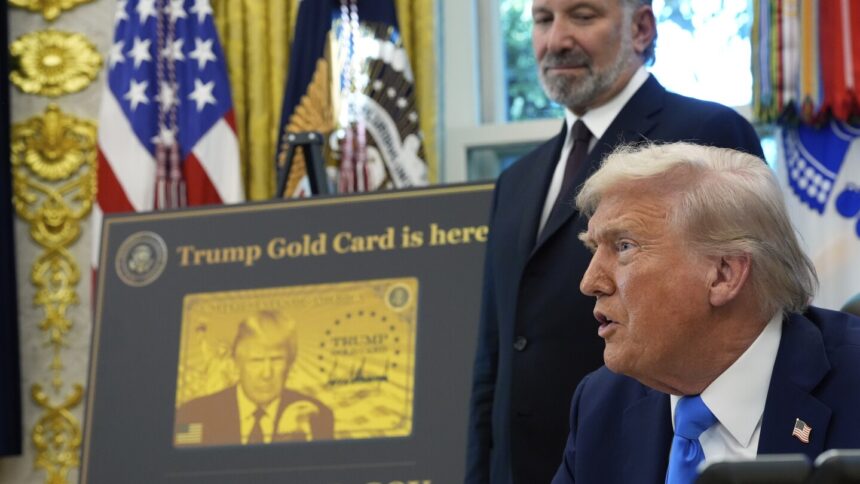
Under the new policy, the existing application fee of $215 has dramatically escalated to $100,000. This fee is stated to be a one-time charge, although Commerce Secretary Howard Lutnick indicated that it could accumulate to $600,000 over the allowable maximum renewals. In a similar move, the administration introduced a “gold card” visa option aimed at wealthy individuals, raising concerns that such sweeping changes might bypass Congress and warrant legal challenges.
Critics of the H-1B program argue that it disadvantages American workers by recruiting overseas talent willing to work for lower wages. Staffing firms like Tata Consultancy Services often employ Indian workers to fulfill roles that might otherwise go to American employees. A report from the Economic Policy Institute found that a majority of H-1B positions had wages below the median for their respective job categories, validating claims of potential wage suppression within the tech sector.
The raised fee is expected to have varied impacts across different industries. While larger tech companies may absorb the cost, smaller businesses and startups could struggle significantly under the financial burden, hindering innovation and growth in the U.S. market. Greg Morrisett from Cornell Tech expressed concerns that this policy would push startups to relocate to more welcoming environments, potentially stifling future technological advancements in the United States.
For many foreign workers, like Alan Wu, the sudden nature of these changes has generated anxiety regarding job security and future residency plans. Wu, who lives in the U.S. on a student visa, shared his hesitation to pursue an H-1B application any further due to the increased obstacles and fears of job loss stemming from the new policy.
The implications of the H-1B changes do not only affect current visa holders; they may also discourage aspiring international students from pursuing education in the U.S. A student from New Delhi reflected on the unfortunate tightening of opportunities, particularly for Indian scholars who often rely on H-1B visas for career advancement.
As the situation develops, many are left to ponder the broader consequences of these policy shifts. The combination of increased fees and stringent measures may lead to long-term effects on the U.S. labor market, potentially diminishing the country’s attractiveness as a destination for skilled labor. As nations like Canada, Germany, and France offer more favorable immigration policies, the U.S. risks losing its competitive edge in attracting global talent.