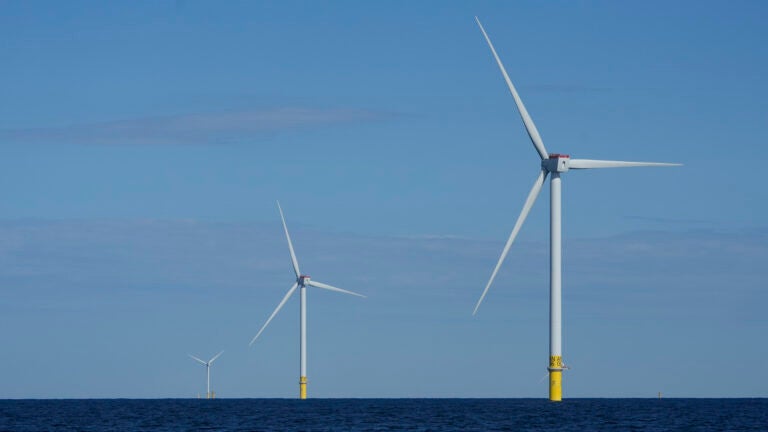
The Trump administration has initiated legal action to block the SouthCoast Wind project, a significant offshore wind farm proposal off the coast of Massachusetts. This move reflects ongoing tensions between the administration and the renewable energy sector, which President Trump has criticized as “ugly” and unreliable in comparison to traditional fossil fuels like coal and natural gas.
On Thursday, the Bureau of Ocean Energy Management (BOEM) filed a motion in federal court to withdraw its approval for the project’s construction and operations plan, which represents the final major federal permit needed before the installation of wind turbines can commence. Proposed to be situated approximately 23 miles south of Nantucket, the SouthCoast Wind initiative aims to erect as many as 141 turbines, with the potential to generate power for around 840,000 homes across Massachusetts and Rhode Island.
This action is part of a broader strategy by the Trump administration, which critics have labeled an “all-out assault” on the wind energy industry. The administration has previously halted progress on several offshore wind initiatives, revoked permits, and canceled plans to designate large federal waters for new offshore development. Moreover, it has put a stop to $679 million in federal funding for various offshore wind projects, a stark contrast to the Biden administration’s approach, which has seen the approval of 11 major offshore wind projects intended to supply clean energy to over six million homes.
In a further demonstration of its re-evaluation of renewable energy projects, the Interior Department recently requested a federal judge in Baltimore to revoke an earlier BOEM approval for an offshore wind project in Maryland, citing deficiencies in the prior impact assessment. Although the developer, U.S. Wind, has not yet begun construction, the Maryland Offshore Wind Project envisions installing up to 114 turbines to supply electricity to more than 718,000 homes.
BOEM’s approval of SouthCoast Wind was granted on January 17, 2025, just days before Trump’s second term commenced. The Interior Department’s legal filing indicates that its review process may not have fully complied with applicable laws nor sufficiently addressed potential impacts from the project.
Ocean Winds, the developer behind SouthCoast Wind, has expressed determination to defend its permits vigorously in federal court, emphasizing the necessity of stable permitting processes for ongoing investment in U.S. infrastructure.
Critics argue that Trump’s policies threaten not only the renewable energy sector but also economic opportunities associated with good-paying jobs. Jason Walsh, executive director of the BlueGreen Alliance—an organization comprising labor unions and environmental groups—accused Trump of pursuing a misguided vendetta against offshore wind, jeopardizing employment in the process.
In contrast to Biden’s swift actions to revoke fossil fuel projects, experts believe that Trump’s concentrated efforts to dismantle the offshore wind industry are more extensive. Kristoffer Svendsen, an energy law expert at George Washington University, stated that potential investors might now view the U.S. as a less appealing market compared to Europe and Asia, where robust opportunities for offshore wind development remain.
As of now, the Trump administration has halted construction on two major offshore wind projects. While the Empire Wind project off New York has been allowed to resume, the Revolution Wind project—intended for Rhode Island and Connecticut—remains on pause, prompting legal actions from both the developer and the involved states.
In addition to SouthCoast Wind, the administration has signaled intentions to reexamine approvals for another project off the Massachusetts coast and has previously withdrawn permits for New Jersey’s Atlantic Shores project. This ongoing confrontation between the Trump administration and the burgeoning renewable energy sector continues to unfold, raising concerns among industry stakeholders about the future viability of offshore wind projects in the United States.