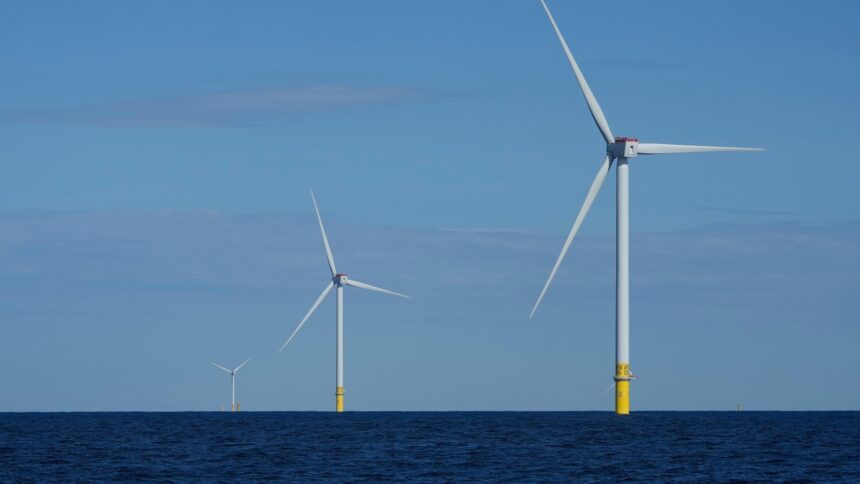
The Trump administration has taken significant steps to block a Massachusetts offshore wind farm, intensifying its critique of an industry that President Trump has described as “ugly” and less reliable than fossil fuel alternatives like coal and natural gas. In a recent legal filing, the Bureau of Ocean Energy Management (BOEM) sought to revoke its approval of the construction and operations plan for the SouthCoast Wind project, the last major federal permit needed for the project to proceed.
Scheduled to be located approximately 23 miles south of Nantucket, SouthCoast Wind aims to install up to 141 turbines capable of powering around 840,000 homes across Massachusetts and Rhode Island. The Interior Department’s move marks the culmination of broader actions the administration has taken against the wind energy sector, which critics have decried as an “all-out assault.” The Trump administration has paused construction on several major offshore wind farms, revoked wind energy permits, and halted funding for a dozen offshore wind projects, amounting to $679 million.
This approach starkly contrasts with the Biden administration’s agenda, which has actively supported the offshore wind industry by approving 11 large wind projects, intended to supply enough clean energy for over 6 million homes. The future of these projects now hangs in the balance amid the Trump administration’s regulatory shifts.
In a separate case, the Interior Department requested a federal judge in Baltimore to annul an earlier BOEM approval for another offshore wind project in Maryland, citing deficiencies in the previous environmental impact analysis. The Maryland Offshore Wind Project plans to install up to 114 turbines and supply power to more than 718,000 homes, but has not yet commenced construction.
According to the Interior Department’s legal filing, BOEM determined that its previous approval of the SouthCoast Wind project may not have adhered fully to legal requirements or adequately assessed potential impacts. The agency has requested a federal judge’s permission to reconsider the project.
Ocean Winds, the developer behind SouthCoast Wind, has expressed its intent to robustly defend its permits in court, emphasizing the necessity for stable permitting processes to encourage ongoing investment in U.S. infrastructure. Jason Walsh, executive director of the BlueGreen Alliance, condemned the administration’s actions, asserting that they jeopardize job growth while pursuing a misguided agenda against offshore wind development.
Experts note the significant contrast in how the Biden and Trump administrations have approached energy policy. While Biden’s approach has involved halting fossil fuel projects like the Keystone XL oil pipeline, Trump’s actions against offshore wind appear more pronounced. Kristoffer Svendsen, assistant dean for energy law at George Washington University Law School, suggests that current regulatory uncertainty may deter offshore wind developers from investing in the U.S., shifting their focus to more stable markets in Europe and Asia.
The Trump administration’s disruption has already paused construction on two major wind farms, with the Empire Wind project in New York recently allowed to continue but the Revolution Wind project for Rhode Island and Connecticut currently halted amid ongoing lawsuits from the developer and state officials. Additionally, the administration is reviewing approvals for another wind farm off the Massachusetts coast and has previously revoked a permit for the Atlantic Shores project in New Jersey.