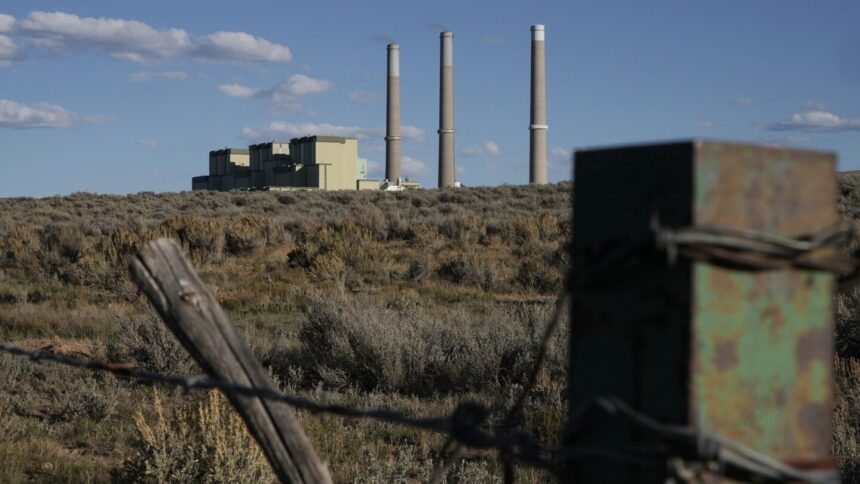
The Trump administration has mandated that the Craig Station power plant in northwestern Colorado, a facility that relies on coal for electricity generation, must remain operational despite its scheduled retirement date. This directive comes in light of a malfunction in the plant’s Unit 1, which has been out of operation since December 19 due to a broken valve. The order issued by Energy Secretary Chris Wright indicates that the owners, including the Tri-State Generation and Transmission Association, will face costs associated with bringing the unit back online.
This decision mirrors recent measures by the Department of Energy to extend the operational life of coal-fired power plants in other states, including Indiana, Washington, and Michigan. Part of President Trump’s broader initiative seeks to rejuvenate the coal industry during a time when many energy companies are transitioning to more cost-effective and environmentally friendly alternatives, like natural gas and renewable energy sources. Meanwhile, the current administration has imposed restrictions on renewable energy projects, particularly wind power, in an apparent effort to bolster coal.
The Craig Station, which has been in operation since 1980, originally planned to retire Unit 1 by the end of 2025 due to economic factors and a range of state and federal regulations. As a not-for-profit cooperative, Tri-State Generation has indicated that its members will absorb the costs linked to compliance with this new order unless alternative arrangements with regional partners can be developed. However, the company has not disclosed the potential costs or timeline for making Unit 1 operational again.
Wright highlighted the necessity of keeping the facility running to mitigate electricity shortages in the northwestern United States. In a statement, he emphasized the administration’s commitment to lowering energy costs and safeguarding American households.
Local sentiment regarding the situation appears mixed. Wade Gerber, an employee at the power plant, has expressed skepticism about the long-term viability of coal in the region, noting that the local economy is undergoing a transition away from fossil fuels. Gerber, who recently opened a distillery, acknowledged the uncertainty surrounding coal’s future and hinted at his own potential career changes should his new business venture succeed.
Criticism of the administration’s order has surfaced from state officials, including Democratic U.S. Senator Michael Bennet, who characterized the directive as an unfair imposition on electricity consumers, arguing that it imposes unnecessary burdens on ratepayers.
The Craig power plant contains a total of three generating units, with the closure of its second and third units anticipated in 2028. The facility sources its coal from the nearby Trapper Mine, which is also expected to shut down in the near future. The ongoing actions and policies surrounding coal energy highlight the intricate balancing act required to navigate both economic realities and environmental responsibilities in the U.S. energy landscape.