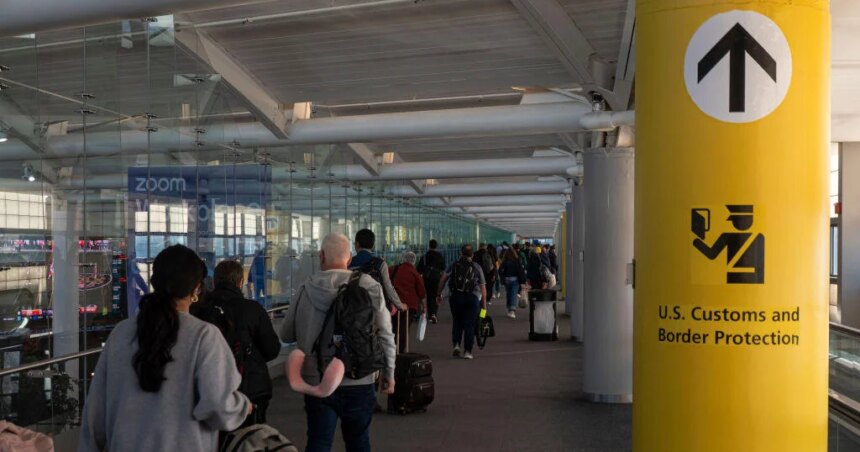
The Trump administration is poised to implement significant changes to the entry process for international visitors from countries participating in the visa waiver program. According to a notice from the Department of Homeland Security (DHS), travelers from 42 nations, which include several European countries such as the United Kingdom, Germany, and France, will be required to provide additional personal information before entering the United States. This proposed shift comes as part of a broader effort to enhance national security.
Currently, citizens from these nations can visit the U.S. for up to 90 days for business or tourism without needing to obtain a visa, a process that traditionally takes extensive time. Instead, they must complete an online application through the Electronic System for Travel Authorization (ESTA), which serves as a preliminary screening mechanism. The DHS’s proposed changes aim to modernize the ESTA process, moving it to a mobile-only format.
Under the new guidelines outlined by Customs and Border Protection (CBP), travelers would have to disclose a range of personal information. This includes their social media history for the past five years, email addresses used in the last decade, and detailed information about immediate family members, such as phone numbers and residential addresses. Notably, the disclosure of social media history would become a compulsory aspect of the application process.
The objective behind these changes is rooted in an executive order issued by President Trump earlier this year, which seeks to enhance vetting measures for individuals entering the U.S. Critics, however, are voicing concerns that these added requirements may deter potential travelers and adversely affect tourism, particularly as the U.S. prepares to co-host the 2026 FIFA World Cup with Canada and Mexico.
In tandem with these proposed measures, the Trump administration has intensified its scrutiny of visa applicants globally and is implementing more rigorous screening for immigrants already present in the U.S. The State Department has adopted stricter vetting processes, impacting those seeking asylum, green cards, or citizenship.
Moreover, U.S. Citizenship and Immigration Services (USCIS) has announced directives to investigate the social media histories of various immigrant categories, with an emphasis on monitoring views and activities considered “anti-American.” Adjudicators are also instructed to thoroughly assess the “good moral character” of legal immigrants applying for citizenship, further reinforcing the administration’s focus on heightened security and scrutiny in immigration policies.
As these changes are still pending review by the White House’s budget office, their potential implications on both traveler sentiment and the U.S. tourism industry remain to be seen.