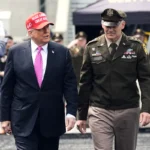
In a significant policy shift, the Trump administration has initiated the process of loosening fuel economy standards for new vehicles, reverting to less stringent requirements that critics say undermine efforts toward cleaner transportation. During an announcement at the White House, President Trump was flanked by executives from several major automotive companies as he declared, “We’re officially terminating Joe Biden’s ridiculously burdensome, horrible, actually, CAFE standards that impose expensive restrictions.”
The Corporate Average Fuel Economy (CAFE) standards, which require automakers to improve the average fuel efficiency of their fleets, are critical for reducing greenhouse gas emissions and fuel costs over time. Under former President Biden, vehicles were expected to increase in efficiency by 2% annually. The Trump administration’s new proposal suggests a significant rollback, resetting the baseline to 2022 and only requiring a 0.5% improvement per year. Additionally, the administration has nullified the previous penalties for non-compliance, further easing the burden on automakers.
This decision has sparked debate, especially given that organizations such as Consumer Reports have found that stringent fuel economy regulations do not necessarily lead to higher vehicle prices. In fact, they can result in long-term economic benefits due to reduced fuel expenses. Automakers that fail to meet CAFE standards previously faced significant fines or were required to purchase credits from more efficient manufacturers, like Tesla.
The proposed changes will now enter a public comment period, where the Department of Transportation will gather feedback from both industry stakeholders and the general public. This move is part of a broader trend within the Trump administration that seeks to roll back Environmental Protection Agency (EPA) regulations aimed at reducing vehicle emissions, thereby affecting the trajectory of cleaner vehicles.
Additionally, Congress has taken steps that signal a definitive shift toward supporting traditional gasoline vehicles over electric ones. Under the new administration, the consumer tax credit for electric vehicle purchases has been eliminated, and plans to cut incentives for installing EV chargers were expedited. The administration also temporarily suspended a federal initiative to establish a high-speed EV charger network, complicating the transition toward electric mobility.
These changes were not unexpected, as Trump had previously campaigned against what he termed the “electric vehicle mandate,” vowing to rescind policies that promote electric vehicle adoption and fuel efficiency. He has portrayed the rollback as beneficial for the auto industry, especially for the increasingly popular, yet less fuel-efficient, SUVs and trucks that dominate the market. Automakers have reported that this regulatory easing will bolster earnings and help counterbalance costs associated with tariffs.
Despite this, the landscape for electric vehicle adoption remains challenging, with U.S. progress lagging behind expectations. Ford CEO Jim Farley, while praising Trump’s leadership on fuel economy standards, also acknowledged the need for a balance between consumer choice, affordability, and environmental sustainability. He noted, “We can make real progress on carbon emissions and energy efficiency while still giving customers choice and affordability.”
As global markets increasingly prioritize climate action—with many countries focusing on advancing electric vehicle technology—the inconsistency in U.S. regulations poses difficulties for automakers trying to establish stable long-term strategies. Farley remarked on the unpredictability of federal regulations, drawing attention to the cyclical nature of policy changes under different administrations. He affirmed Ford’s commitment to developing an affordable electric pickup despite the current regulatory environment.
As this situation develops, the public and industry stakeholders await the outcome of the comment period, which will precede the finalization of the new fuel economy standards that could reshape the future of automotive manufacturing and environmental policy in the United States.