Inflation rates have remained relatively low in recent months, contributing to a notable improvement in economic sentiment among businesses and consumers in the United States. One significant factor behind this positive shift is the reduction of tariffs on Chinese imports, which saw a dramatic decrease in May and have remained unchanged since then.
However, this tranquility may soon be disrupted. On Friday, President Donald Trump announced that his administration is contemplating a substantial increase in tariffs on Chinese exports to the U.S. This announcement comes in response to China tightening its export controls on essential rare earth materials crucial for electronics manufacturing. Consequently, Trump has reconsidered a previously scheduled meeting with Chinese President Xi Jinping in South Korea later this month.
Trump’s message, shared via a post on Truth Social, sent shockwaves through the financial markets. Investors quickly began to worry about a repeat of last spring, when tariffs on Chinese goods soared to an unprecedented 145%. The Dow Jones Industrial Average plummeted nearly 700 points, or 1.4%, while the S&P 500 experienced a decline of 2% and the tech-heavy Nasdaq dropped by 2.7%. Although Trump has a history of making aggressive statements without following through, the prospect of renewed tariffs raises legitimate concerns for investors, consumers, and businesses alike.
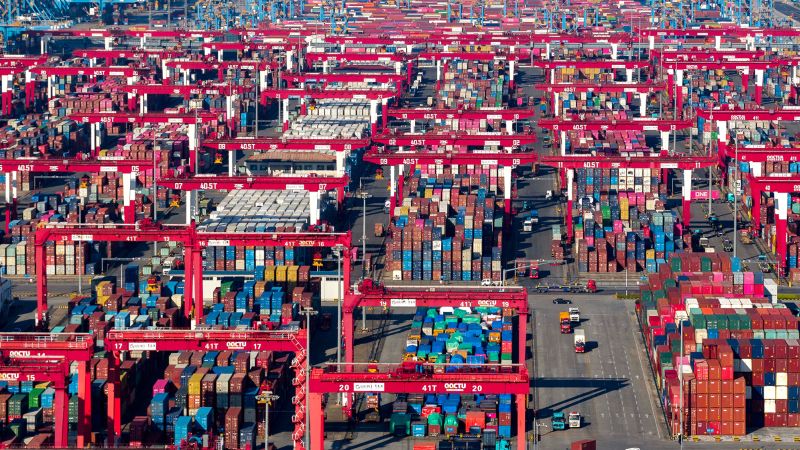
The U.S. and China, as the world’s two largest economies, are critically intertwined in global trade. Despite Mexico recently surpassing China as the primary source of foreign goods in the U.S., America remains heavily reliant on Chinese imports worth hundreds of billions of dollars. Simultaneously, China relies on the U.S. as one of its top export markets.
Among the significant imports from China are electronics, clothing, and furniture. Trump has previously encouraged CEOs to shift production back to the U.S., though he has softened his rhetoric as American business leaders have announced substantial investments in domestic manufacturing while continuing to produce a majority of their products overseas.
In the past, after imposing the eye-watering 145% tariffs, Trump made a notable exemption for electronics, reducing the tariff rate to 20%. This decision marked an acknowledgment of the economic strain that such high tariffs placed on the American economy. The rationale was further solidified in May, when trade talks led to both nations lowering tariffs—China’s on American exports dropped from 125% to 10%, and the U.S. reduced its rates from 145% to 30%. These measures resulted in a subsequent rally in both countries’ stock markets.
Despite Trump’s claims that Chinese trade hostility emerged unexpectedly, these tensions have been escalating for months. A key element of ongoing trade negotiations has been China’s commitment to increasing the supply of rare earth magnets to the U.S. However, Trump has accused China of breaching these agreements, further complicating the trade landscape.
In a series of moves, Trump first placed restrictions on the sale of American technologies to China, including critical components like certain AI chips. While many of these restrictions were later lifted, he then proposed fees on goods transported via Chinese-owned or -operated ships, to which China responded with reciprocal actions targeting American vessels starting Friday.
The current situation underscores the potential volatility of U.S.-China trade relations, with Trump indicating that there may be no upper limit to tariffs on China, while Xi Jinping has shown a willingness to retaliate firmly. However, Trump’s capacity to unilaterally increase tariffs could soon face limits, depending on an upcoming landmark Supreme Court case. In contrast, Xi appears free from similar constraints, raising the stakes in this ongoing trade rivalry.