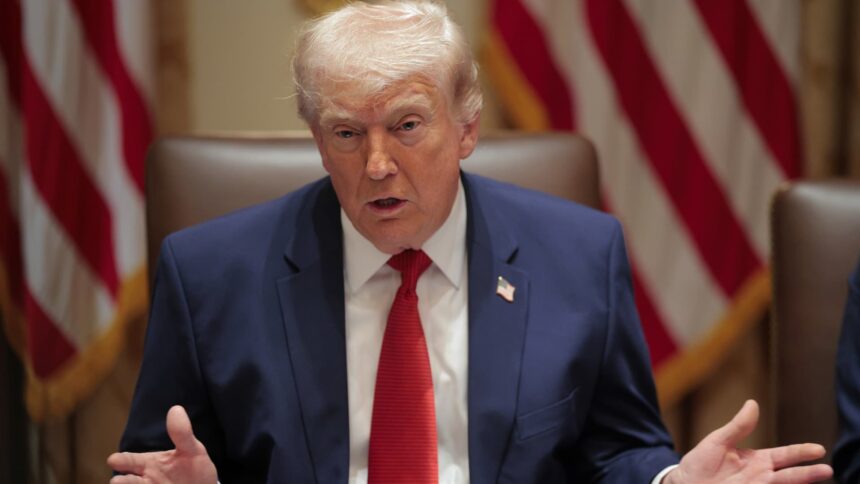
During a recent Cabinet meeting, President Donald Trump conveyed a sense of optimism regarding the economic impact of the ongoing conflict in Iran. He indicated that the increase in oil prices and the decline in the stock market have not reached the levels he had initially expected. Addressing Treasury Secretary Scott Bessent, Trump remarked that oil prices have not surged as dramatically as he had feared and expressed a belief that they would stabilize, potentially dipping below previous levels.
The war has influenced market volatility, with U.S. crude prices climbing to nearly $100 a barrel at the onset of the conflict. However, prices have since dipped slightly, coinciding with Trump’s assurances that the fighting will cease soon. Despite this, oil prices have risen over 40% during the war, contributing to a surge in gasoline prices of over $1 per gallon.
On the stock market front, the S&P 500 has experienced a decline of 4.8% in March alone, falling 6.5% from its record high earlier this year. These metrics are critical for Trump, as he has historically linked them to his economic performance. He previously criticized former President Joe Biden over rising gas prices and has pointed out that the Dow Jones Industrial Average surpassed 50,000 in early February.
Trump reiterated his confidence that the economic repercussions will reverse following the end of hostilities, stating, “My predictions have been right.” However, there is growing concern among Wall Street economists regarding a potential recession within the next year. Most analysts warn that unless the conflict concludes promptly, ongoing inflation and the fallout from escalating oil prices could lead to an economic contraction.
As Trump spoke, major stock averages were in the negative territory, while oil prices continued to increase by over 4%. Earlier in the day, he had taken to social media to urge Iranian negotiators to “get serious, before it is too late,” underscoring the urgency he feels regarding the situation in the Middle East.