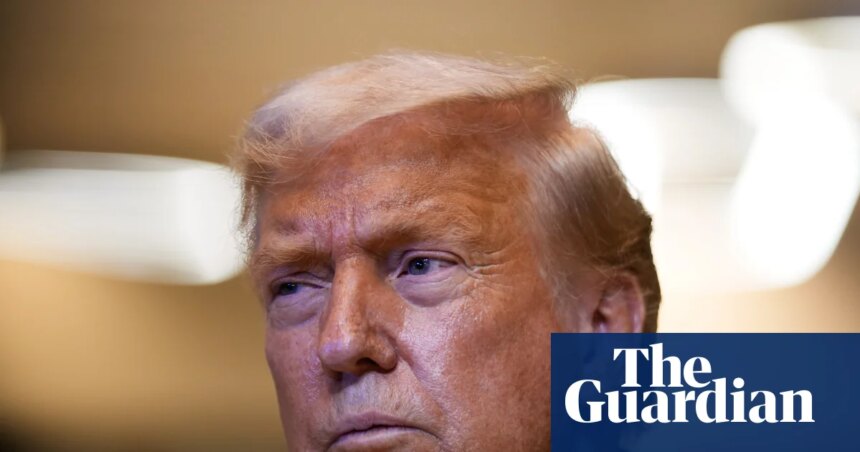
Donald Trump has recently expressed significant concern regarding the impact of datacenters on the United States’ already strained electricity market. As electricity prices surge, there are growing apprehensions within his party about how rising energy costs could adversely affect their prospects in the upcoming November elections.
This anxiety was publicly articulated through two notable actions taken by Trump in mid-January. First, on January 13, Trump and Microsoft’s president announced a groundbreaking agreement, stating that the tech giant would assume full responsibility for property taxes related to its datacenters, alongside a commitment to forego tax breaks and discounts on electricity prices in the municipalities where it operates. Trump emphasized the importance of the datacenter sector in maintaining America’s status as a leader in artificial intelligence, asserting that major technology companies must “pay their own way.”
Just a few days later, on January 16, Trump, alongside governors from northeastern states, directed the country’s largest power grid operator to conduct an emergency auction aimed at ensuring future reliability by September. This initiative may compel major tech companies to invest in the construction of new power plants as they will need to bid on the electricity they intend to draw from the grid. Trump firmly stated, “I never want Americans to pay higher electricity bills because of Data Centers.”
In a move that followed Microsoft’s lead, OpenAI announced on January 20 its commitment to cover energy costs in a manner that would not impact electricity prices for consumers. This pledge comes as part of a broader collaboration between the AI industry and the Trump administration focused on a substantial investment in AI infrastructure.
The rising demand for electricity, particularly driven by advancements in AI, presents a complex challenge for Trump, who has promised to cut Americans’ electricity bills significantly. However, recent assessments by various news outlets suggest that such a promise may be unrealistic. Even as AI increases energy demands, the administration has been criticized for obstructing renewable energy initiatives, which Trump has disparaged as a “scam.” Instead, his administration has been pushing for an expanded focus on oil and gas drilling, which could inadvertently drive costs higher for consumers.
These energy pricing challenges are intertwined with broader economic concerns as rising costs have put Trump’s party at a disadvantage ahead of the upcoming elections. Additionally, the implications of these energy policies are not limited to the United States.
In Europe, governments are grappling with the pressures associated with the proliferation of datacenters, which are known for their insatiable energy needs. Germany, which hosts the most datacenters in Europe, has faced constraints due to high energy prices despite attempts to encourage data center expansion through subsidies for heavy electricity use. In a contrasting approach, the UK has seen construction expand, albeit with electricity rates that are among the highest globally, further complicating the landscape for its citizens who are already battling rising living costs.
Furthermore, Ireland has already experienced alarming impacts from datacenter proliferation; electricity consumption from these facilities surpassed that of all urban homes by 2024, prompting the government to impose a ban on new datacenters connecting to Dublin’s power grid.
As these challenges escalate, both Trump and various tech companies are looking toward the Gulf states, where they have committed to building large datacenters. Although energy is more affordable in these regions, water scarcity poses a different challenge for cooling operations. Additionally, significant investments are being targeted at datacenters in India, where the reliability of electricity can be questionable, and the infrastructure often struggles to keep pace with growing demands.
As the datacenter boom continues to evolve, the intersection of energy policy, technological advancement, and economic ramifications will remain a critical issue for policymakers and industry leaders alike.