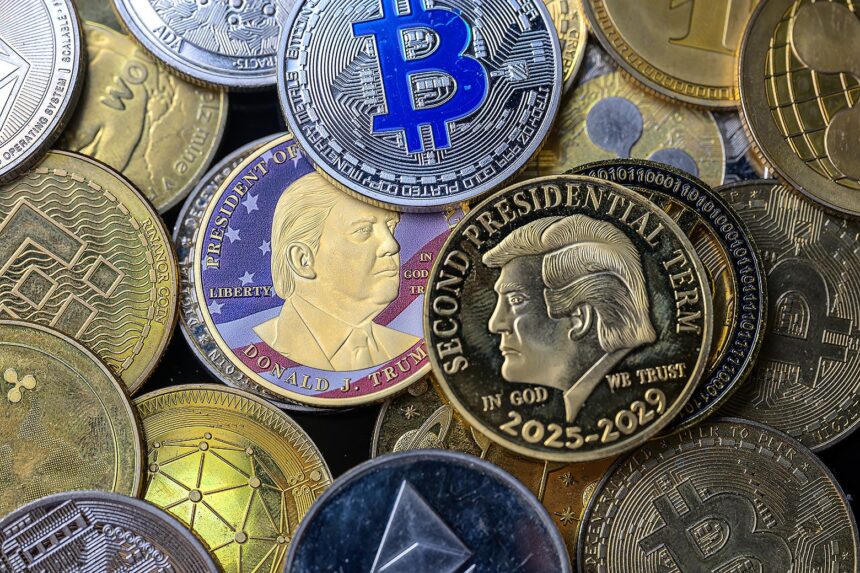
The Trump family’s recent ventures into the cryptocurrency realm have yielded significant financial gains, particularly through the launch of WLFI tokens by their co-founded firm, World Liberty Financial. On Labor Day, the public sale of these tokens generated a staggering $1 billion in trades across major crypto exchanges such as Coinbase, Kraken, and Binance. The Trump family currently holds billions in World Liberty tokens, and the recent surge in public trading has significantly elevated the value of these assets. Reports indicate that Donald Trump and his sons are poised to profit around $5 billion from this venture, marking one of their most substantial financial successes since his presidency began.
While the magnitude of this success is clear, it raises questions about the underlying motivations of the Trump family in their foray into the cryptocurrency market. Analysts suggest that their active involvement in digital assets may serve a dual purpose: enriching the family’s wealth and bolstering the crypto industry as a whole, which has struggled to gain traction among the general American public.
The dynamics of this crypto sphere reveal a complex interplay between financial gains and strategic positioning. Earlier in the year, Eric Trump and Donald Trump Jr. announced their investment in American Bitcoin, a venture that received a boost from favorable governmental policies that correlated with an uptick in Bitcoin’s valuation. However, the excitement surrounding the launch has since waned, with the value of American Bitcoin’s stocks dropping significantly shortly after debuting.
Accompanying these ventures are the struggles of Trump Media & Technology Group, the parent company of Truth Social, whose valuation has plummeted since the Trump presidency. In an effort to revive interest, executives have proposed launching crypto-centric exchange-traded funds and partnering with prominent crypto firms. Recent announcements have included plans for a digital asset treasury company aimed at generating unique reward tokens for premium Truth Social users.
Additionally, the family’s previous foray into meme coins, designed for niche audiences, led to substantial revenues, including $320 million generated just from transaction fees related to one such coin. However, there’s been a stark decline in the value of these meme coins and other associated cryptocurrencies since their peaks earlier this year. For instance, the $TRUMP meme coin has dropped significantly, reflecting broader trends of volatility in the crypto market, as has the $MELANIA coin.
The investments connected to World Liberty Financial and related ventures showcase a pattern of lucrative transactions contrasted by steep declines in market value. Key stakeholders, including Donald Trump and associates, have not divested their holdings despite the downturn, portraying a semblance ofconfidence in the sustainability of their investments. This steadfastness comes amidst a backdrop of governmental deregulation efforts aimed at propelling the crypto industry, a strategy that has garnered substantial backing from lobbyists and companies within this sector.
Despite the potential short-term financial windfalls, the true market viability of these ventures appears fragile. As investments continue to plummet, the underlying question remains: are these moves simply a means for the Trump family to capitalize on a speculative bubble, or is there a longer-term strategy in play? Observers note that the family’s approach seems less rooted in a belief in crypto’s transformative potential and more aligned with a transactional relationship to shore up financial returns and electoral support.
Industry figures have expressed concern as the broader market for cryptocurrencies continues to oscillate. While there have been recent rebounds in major currencies, such as Bitcoin and Ethereum, the general public’s engagement with crypto assets remains tepid. The desire among certain segments of the crypto community for government endorsement adds a complicated layer to the engagement, especially as high-profile endorsements from the Trump family aim to lend legitimacy to an industry facing skepticism.
As the Trump family’s involvement in cryptocurrency develops, the ripple effects could shape both market dynamics and regulatory landscapes leading up to the 2024 election. This arms race between crypto endorsements and public adoption highlights the precarious nature of blending political influence with speculative finance, leaving many to wonder how sustainable this current cycle truly is.