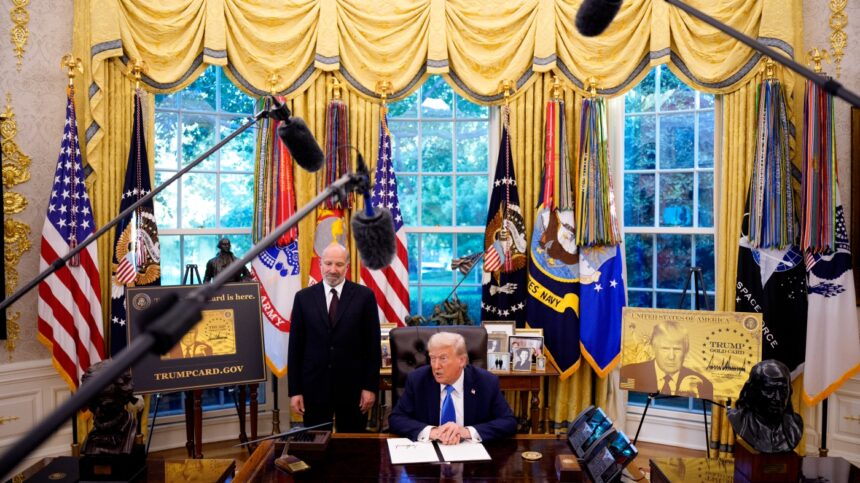
In a significant move on September 19, 2025, President Trump signed two executive orders in the Oval Office, introducing major changes to U.S. immigration policy that could reshape the landscape for foreign nationals seeking to live and work in the country. The new measures aim to generate billions in revenue through substantial visa fees, specifically targeting high-skilled workers and wealthy foreign investors.
The centerpiece of the new regulations is the establishment of the “Trump Gold Card,” a visa program that offers foreigners permanent residency and a pathway to U.S. citizenship in exchange for a $1 million investment in the United States. Employers can also secure this visa for foreign workers by paying a sponsorship fee of $2 million. During the signing ceremony, Trump emphasized the potential financial benefits of this initiative, stating, “This program will raise more than $100 billion, which we’ll use for cutting taxes and paying down debt.”
Accompanying this initiative is a proposal for a “Platinum Card,” which aims to replace the existing investor visa. Although details remain scarce, a senior administration official indicated that this card would cost $5 million and allow its holders to reside in the U.S. for up to 270 days without incurring taxes on income earned outside the country. This proposal would require congressional approval to be implemented.
In addition to the investor visa changes, Trump’s second executive order introduces a new $100,000 fee for high-skilled workers applying for H-1B visas. This license caters to highly educated professionals, such as software engineers and healthcare workers, looking to work in the U.S. The existing program allows for 85,000 H-1B visas to be allocated annually through a lottery system, primarily sponsored by large tech companies like Amazon, Microsoft, and Apple. However, the administration has criticized the program, claiming it is susceptible to abuse, where companies employ foreign workers at lower salaries than their American counterparts.
Commerce Secretary Howard Lutnick, who joined Trump during the signing, explained how the new fee aims to deter companies from hiring low-cost foreign labor. He stated that the increased financial burden would force employers to either hire truly valuable foreign workers or opt for American candidates. “If you’re going to train people, you are going to train an American,” he asserted.
The current costs for companies seeking H-1B visas are relatively low, including a registration fee of $215, along with additional filing costs. The steep increase to $100,000 represents a dramatic shift in policy that has already sparked debate among various political factions.
This executive order comes amid broader efforts by the Trump administration to elevate fees on various immigration-related applications, such as asylum claims and work permits, as part of a strategy to enhance funding for immigration enforcement. The approach seeks to bolster resources for new immigration agents and detention centers, addressing a contentious area of public policy that remains divided across party lines.
The new measures are likely to leave a lasting impact on the business community, especially in the tech industry, while evoking sharply different reactions from proponents who argue for a merit-based immigration system and critics who warn of the consequences for American workers. As the proposals move forward, the administration will face challenges in navigating both legislative approval and public opinion.