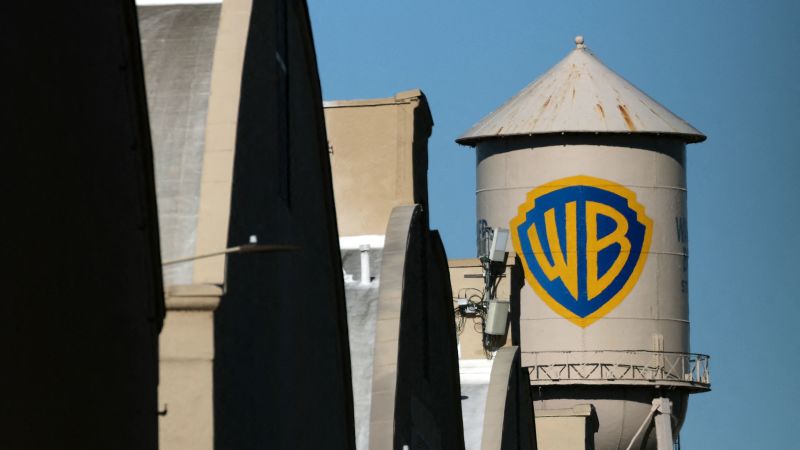
The ongoing effort to acquire Warner Bros. Discovery, one of Hollywood’s most significant assets, is attracting attention from unexpected quarters, particularly former President Donald Trump. He appears to see his own interests intertwined in this potential transaction, and he is poised to influence its regulatory outcomes.
On Sunday evening, Trump announced that he would engage in decisions regarding the regulatory approval of a $72 billion proposal from Netflix to acquire a substantial portion of Warner Bros. Discovery. Traditionally, such regulatory matters are insulated from direct political influence, but Trump’s declaration has raised eyebrows.
The very next day, Paramount entered the fray by launching a hostile takeover bid for Warner Bros. Discovery. The company cited concerns over what it described as a “challenging regulatory approval process” for Netflix’s ambitious deal.
During a White House appearance, Trump refrained from openly supporting either bidder, stating, “None of them are particularly great friends of mine. I want to do what’s right. It’s very important to do what’s right.” This positioned him as a key player in a transaction that could significantly impact both the film and news industries in the United States.
Despite his claims of neutrality, Trump’s connections hint at a complex network of allegiances. He shares a close relationship with billionaire Larry Ellison, whose son recently became the CEO of Paramount. According to a senior White House official, Ellison and Trump have already discussed the prospects of Paramount acquiring Warner Bros. Discovery.
Notably, Jared Kushner, Trump’s son-in-law, is involved in Paramount’s takeover efforts through his private equity firm. However, Trump indicated that he had not discussed these dealings with Kushner.
White House advisers have speculated on the future ownership of Warner Bros. Discovery, noting that a Paramount acquisition could lead to leadership changes at CNN, a network frequently critical of Trump. Some within the administration have suggested that journalist Bari Weiss could lead CNN under Paramount’s ownership, aligning her leadership style more closely with Trump’s preferences for the media.
David Ellison, when interviewed, acknowledged the conversations they’ve had with Trump regarding Paramount’s potential acquisition of CNN, but he carefully avoided speaking for the former president.
Complications arose when Trump expressed dissatisfaction with Paramount, specifically criticizing its management of the investigative program “60 Minutes,” which he claims has worsened under its new ownership. He vented on social media about how the show had recently given GOP Representative Marjorie Taylor Greene a platform, further complicating his relationship with the studio.
On the other hand, Trump has praised Netflix’s co-chief Ted Sarandos, describing him as a “great person” after a recent meeting in the Oval Office. Trump lauded Sarandos as a transformative figure in the entertainment industry while also raising concerns about the extensive market share Netflix would gain if the acquisition were to go through.
As the competing bids unfold, the landscape is murky. Antitrust reviews for such significant deals typically undergo extensive evaluations without direct political interference. However, the current environment suggests Trump’s involvement could tilt the scales, particularly in favor of Paramount, given his past connections and ongoing dialogues with the parties involved.
Amid this landscape, it seems that Trump’s loyalties are far from clear-cut. His statements have fluctuated, revealing both his knowledge of the industry and his intent to involve himself in regulatory discussions.
As the competition heats up, analysts argue that Paramount may have an easier path to regulatory approval than Netflix, given the complexities and perceptions surrounding each company’s brand.
Trump recently remarked, “They have a very big market share. And when they have Warner Bros., you know, that share goes up a lot,” indicating he plans to be an active participant in the unfolding drama surrounding Warner Bros. Discovery and its potential buyers.
With close relationships and political dynamics at play, the battle to acquire Warner Bros. Discovery illustrates the intersection of entertainment, business, and governmental influence in a way that remains increasingly relevant in today’s media landscape.