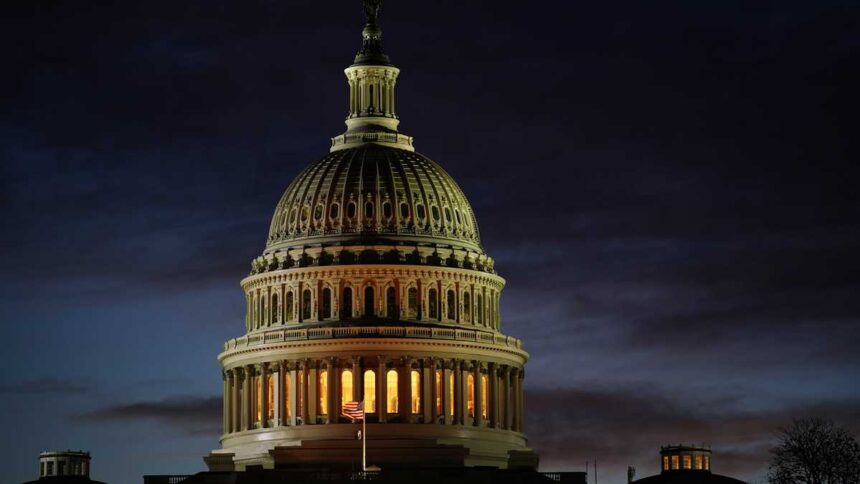
President Donald Trump is advocating for an alternative to the healthcare proposals put forth by Democrats, which are crucial in the ongoing government shutdown negotiations that have persisted for 40 days. As lawmakers continue discussions over the weekend for the first time during the shutdown, the repercussions are becoming increasingly evident, with growing flight cancellations and delays affecting SNAP benefits for millions.
In a recent social media post, Trump urged Senate Republicans to redirect funding away from insurance companies and instead allocate it “DIRECTLY TO THE PEOPLE SO THAT THEY CAN PURCHASE THEIR OWN, MUCH BETTER, HEALTHCARE, and have money left over.” He criticized the Affordable Care Act (ACA), commonly referred to as “Obamacare,” calling it “the worst Healthcare anywhere in the World.” Trump’s stance could further alienate Republicans from supporting the new proposal from Senate Democrats that seeks to end the shutdown while extending enhanced ACA tax credits for an additional year, allowing more time for broader reform discussions.
Senator Lindsey Graham of South Carolina expressed gratitude for Trump’s direction, asserting he would oppose any extensions of the expanded tax credits. “Republicans are not about to further burden taxpayers by blindly extending a flawed program,” stated Senate Majority Leader John Thune from South Dakota, condemning the Democrats’ proposal as merely a continuation of existing issues that increase premiums and enrich insurance companies at taxpayer expense.
Senate Minority Leader Chuck Schumer from New York characterized the Democrats’ offer as a “perfectly reasonable compromise,” calling out Republicans who prematurely dismissed it. Schumer emphasized that the proposal is not a new initiative but merely seeks to maintain current funding levels.
The expanded subsidies available during the COVID-19 pandemic have been pivotal in reducing out-of-pocket expenses for many Americans using ACA marketplaces. However, these subsidies are set to expire at the end of the year unless Congress intervenes. Senator Bernie Sanders, an Independent who aligns with Democrats, highlighted the urgent need to prevent a significant hike in premiums that would be unaffordable for countless individuals, labeling such a scenario as a potential disaster.
GOP leadership has exhibited a more favorable disposition towards a bipartisan proposal emerging from negotiations aiming to conclude the shutdown. This proposal would provide funding for critical government sectors, such as food aid and veterans’ programs, utilizing short-term financial extensions for other areas until December or January. Currently, this plan guarantees a Senate vote on future healthcare policy but lacks any commitments to specific outcomes, potentially placing Democrats in a challenging position. Some have indicated that a Senate vote without genuine concessions would not adequately address what they perceive as a healthcare crisis.
House Speaker Mike Johnson has yet to signify whether a vote will take place in the House, though Republican representatives have consistently stated their intention to revisit healthcare issues after the government reopens.
While the GOP strategy for tackling rising premiums remains somewhat ambiguous, Senator Bill Cassidy from Louisiana has proposed the idea of flexible health savings accounts funded in advance by the federal government. He urged lawmakers from both parties to transcend partisanship, stating, “If to open the government, we need to talk about healthcare, then, by golly, let’s talk about healthcare.”