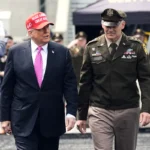
President Donald Trump is preparing to unveil a significant proposal aimed at easing vehicle mileage regulations for the auto industry, which would reduce the pressure on automakers to minimize pollution from gasoline-run vehicles. This announcement is expected during a scheduled event at the White House, where Trump will be joined by top executives from the three largest U.S. automakers.
Sources familiar with the plan, who spoke on the condition of anonymity, indicated that the proposal would notably decrease fuel economy requirements, which dictate the distance new vehicles must travel per gallon of gasoline, extending through the 2031 model year. Although additional details regarding the announcement are not yet available, it represents a continuation of the Trump administration’s efforts to roll back Biden-era policies that had promoted cleaner vehicles, including electric models.
Burning gasoline remains a substantial contributor to greenhouse gas emissions that exacerbate climate change. However, the administration has argued that relaxing these rules will enhance Americans’ access to a broader variety of gasoline vehicles that are both affordable and needed by consumers.
In supporting this move, Ford CEO Jim Farley characterized the proposed rollback as beneficial for customers and practical. He commended Trump’s leadership for aligning fuel economy standards with the realities of the market, suggesting that progress on carbon emissions and energy efficiency could still be achieved while offering consumers a range of choices.
Stellantis CEO Antonio Filosa echoed this sentiment, expressing appreciation for the administration’s efforts to “realign” fuel economy standards with market needs. However, environmental advocates have condemned the proposal, warning it may exacerbate several pressing issues, such as dependence on oil, rising gas prices, and climate change. Dan Becker, director of the Safe Climate Transport Campaign, criticized the move, stating that it would hinder the U.S. in the competitive race for green technology against foreign automakers.
Trump has previously vowed to dismantle what he inaccurately calls an electric vehicle “mandate,” referencing President Biden’s target for electric vehicles to comprise half of all new vehicle sales by 2030. Currently, electric vehicles account for around 8% of new vehicle sales in the U.S., according to 2024 data from Cox Automotive. It is important to note that no federal policy mandates automakers to sell electric vehicles, though states like California have implemented regulations requiring all new passenger vehicle sales to be zero-emission by 2035.
Transportation Secretary Sean Duffy has been an advocate for reviewing and potentially reversing existing Corporate Average Fuel Economy requirements since taking office. He has argued that the standards set under Biden were illegal due to their inclusion of electric vehicle calculations, which do not apply to gasoline consumption. Under the previous administration, automakers were mandated to achieve approximately 50 miles per gallon by 2031, up from about 39 miles per gallon currently.
The auto industry has suggested that the stringent rules put in place during Biden’s presidency were challenging to comply with, voicing concerns that these standards could stifle growth and innovation. Mileage regulations have been a fixture of U.S. policy since the 1970s energy crisis, with each subsequent iteration highlighting the gradual improvement in vehicle efficiency over the decades.