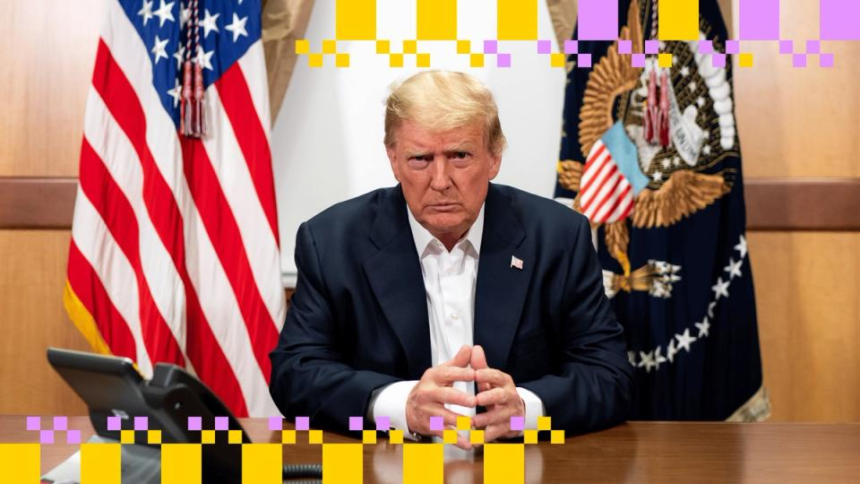
U.S. President Donald Trump has raised concerns regarding the stability of the GENIUS Act, a significant piece of legislation aimed at regulating stablecoin markets, which he enacted last year. In a recent post on Truth Social, Trump claimed that bankers are attempting to undermine this landmark law and called for swift congressional action on crypto market structure legislation.
“The U.S. needs to get Market Structure done, ASAP. Americans should earn more money on their money,” Trump stated. He criticized banks for achieving record profits while warning against allowing them to obstruct the advancement of U.S. interests in the global crypto market. “If we don’t get The Clarity Act taken care of, the powerful Crypto Agenda could end up benefitting China and other countries,” he added.
Trump emphasized the necessity of the Clarity Act for maintaining the crypto industry’s presence in the United States. He urged banks to negotiate in good faith with the crypto sector, highlighting that doing so is crucial for the benefits of the American populace.
Currently, the market structure bill faces obstacles in Congress, primarily due to tensions between banking institutions and the crypto industry. A crucial point of contention is whether third parties, like exchanges, should be permitted to offer yield on stablecoin deposits. While banks fear that such practices could lead to a loss of customers, crypto advocates argue that allowing individuals to earn yield on their holdings should be standard practice, as established in the GENIUS Act.
Meetings facilitated by the White House between representatives from both industries have taken place to address these issues. Draft language surrounding the bill is reportedly circulating among lawmakers. However, despite a tentative deadline set for the end of February to reach a consensus, no clear agreement has surfaced as of yet. The summer recess and the impending 2026 election cycle present additional time constraints for lawmakers aiming to finalize the legislation.
Further complicating the situation, a recent proposal from the Office of the Comptroller of the Currency suggested that contracts between stablecoin issuers and their third-party partners must be explicit about their offerings, though it stopped short of banning yield payouts.
Adding to the overall context, World Liberty Financial, a firm linked to Trump and his family, is in the process of launching its own stablecoin, USD1, and has sought a trust charter from the OCC for an affiliated entity.
Interestingly, Trump’s invocation of financial policy comes on the heels of overseeing U.S. military operations against Iran, which have triggered disruptions in air travel across the Middle East and affected shipping through the strategically important Strait of Hormuz.