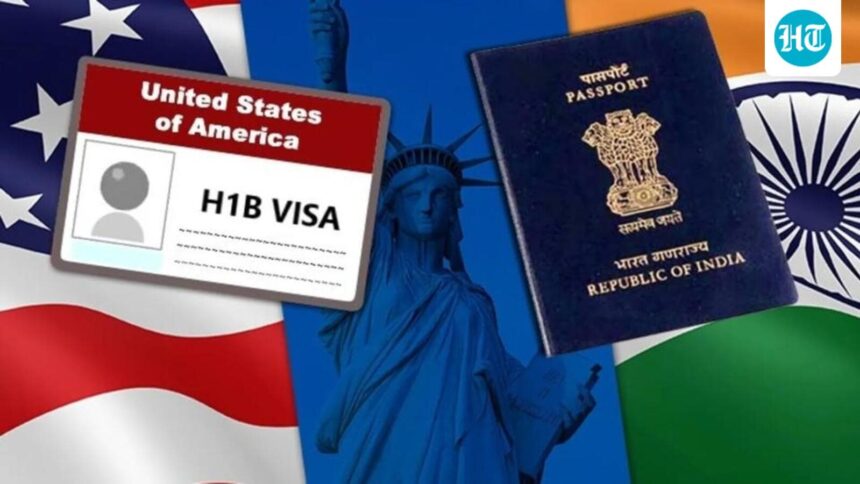
U.S. President Donald Trump has announced significant changes to the H-1B visa program that could drastically alter its landscape, particularly affecting Indian nationals who have historically benefited the most from it. In a move described by analysts as potentially crippling, the new H-1B visa fees have been set at a staggering $100,000. This fee exceeds the median annual salary of new H-1B visa holders, which is reported to be around $97,000, and surpasses 80% of the average annual salary for all H-1B visa holders.
The updated fee structure, implemented through a White House executive order, marks a substantial shift from the previous registration costs of $215 for the H-1B lottery and an additional $780 that employers typically bear for sponsoring applicants. The new scheme also introduces a high-cost “gold-card visa” option, allowing individuals and corporations to secure U.S. visas for fees of $1 million and $2 million, roughly translating to ₹9 crore and ₹18 crore respectively.
As the largest provider of H-1B visa recipients, India could face significant setbacks as a result of these changes. In a report by the U.S. Citizenship and Immigration Services, it was noted that in 2024 alone, Indian nationals received 71% of the total 399,395 H-1B visas approved, far outpacing the next highest country, China, which received just 11.7%. With the exorbitant fees now outpacing the annual salaries offered to new visa holders, there are concerns that fewer applications will be submitted. This potential decline in applications could be more damaging to U.S.-India relations than the 50% tariffs already imposed on Indian exports.
Analysts are warning that these changes could lead to a significant reduction in skilled professionals entering the U.S. labor market, particularly from India, which has relied heavily on the H-1B program. The financial burden introduced by the new fee structure has led many observers to question the viability of the program itself, as the obstacles now facing potential applicants may render the H-1B visa essentially unaccessible.
While Trump often revises his policies, the current trajectory of the H-1B visa program raises significant alarms about its future and the broader implications for U.S.-India relations. The potential halt in the influx of talent and skills that the H-1B program has historically facilitated could hinder innovation and economic growth in the U.S., while also placing further strain on diplomatic ties with India.