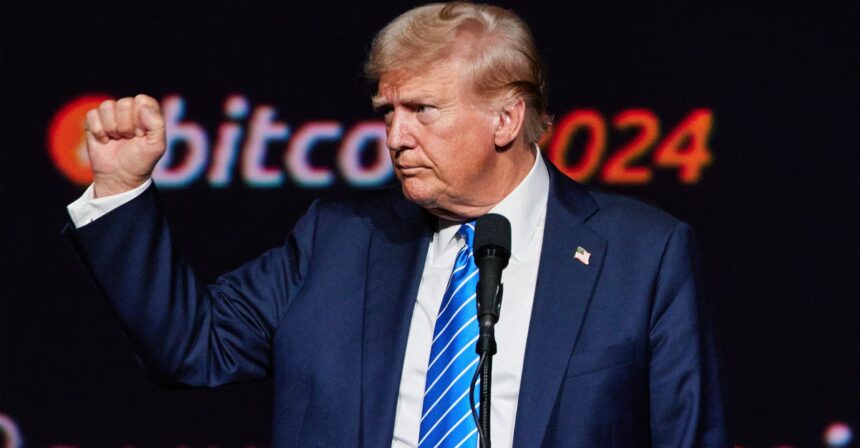
During the summer of his 2024 presidential campaign, Donald Trump made a bold promise to the cryptocurrency sector, asserting that under his leadership, the United States would rise as the “crypto capital of the planet.” This declaration seemingly resonated with voters and donors from the digital assets space, helping Trump secure a strong position in the White House. Following his election, there was a notable surge in the value of various cryptocurrencies, a trend Trump was quick to claim credit for, famously posting “YOU’RE WELCOME!!!” when bitcoin hit an impressive peak of over $100,000.
However, the landscape of the crypto industry has drastically shifted since those heady days. As of October 6, bitcoin reached an all-time high of more than $126,000 but has since plummeted to around $69,000, reflecting a broader collapse in the cryptocurrency market. The overall market capitalization has decreased by an astonishing $2 trillion, prompting a stark decline in speculative trading, particularly in meme coins and derivatives. The once-bustling world of crypto venture capital has similarly stagnated, leading analysts to speculate whether Trump might pursue some form of government intervention or bailout to stabilize an industry that he has closely aligned himself with.
Trump’s election manifested as an implicit bailout for cryptocurrencies as he pledged that prices would rise. Throughout his presidency, he has actively promoted the crypto narrative, utilizing unconventional tactics like limited-edition bitcoin-orange sneakers, engaging in deregulation measures, and personally benefiting from family investments in digital assets. Estimates suggest that the Trump family has accrued hundreds of millions from their crypto ventures.
While Trump’s involvement undeniably links him to the market’s fluctuations, the current downturn is not solely a reflection of his influence or the administration’s crypto-friendly policies. Bitcoin has long been subject to cyclical volatility characterized by periods of rapid growth followed by steep declines—an attribute that Trump himself once dismissed as a “scam.” The technical mechanics of bitcoin’s performance, such as the process known as “halving,” along with shifts in global investor sentiment contribute to these unpredictable trends. The euphoria of late 2021, sparked by NFT hype and venture capital injections, gave way in 2022 to a market correction, exacerbated by the scandals surrounding figures like Do Kwon and Sam Bankman-Fried, as well as a tightening regulatory environment.
Since Trump took office, he has positioned himself as the face of the crypto industry. His administration has supported frameworks like the GENIUS Act, aiming to regulate stablecoins, and has rolled back Biden-era investigations that threatened industry players. Key figures in his administration, including the venture capitalist David Sacks, now serve in critical advisory roles focused on AI and cryptocurrency, thus solidifying Trump’s reputation as the “crypto president.”
Despite these pro-crypto policies and investments, the decline in cryptocurrency prices reveals that no single entity, including a supportive administration, can single-handedly stabilize the market. The global crypto market has retraced its gains since Trump’s inauguration, raising questions about the viability of the current regulatory landscape should administration leadership shift in the coming years.
As the cryptocurrency industry navigates this tumultuous period, debates about whether Trump might initiate a bailout are gradually being dismissed by financial authorities. Treasury Secretary Scott Bessent recently affirmed that the government lacks the jurisdiction to compel private banks into purchasing bitcoin, highlighting the limitations of governmental influence over this decentralized currency.
Bitcoin, once envisioned as a counter to traditional financial systems, has increasingly embedded itself within the existing economic infrastructure. While institutional investments have contributed to its mainstream acceptance, the turbulent nature of the crypto market remains, controlled by a myriad of global participants and economic factors rather than a singular political influence.
In the end, Trump’s narrative of “I alone can fix it” is challenged by the inescapable reality of the inherent volatility within the crypto space—a reminder that market dynamics often transcend the proclamations of even the most powerful politicians.