









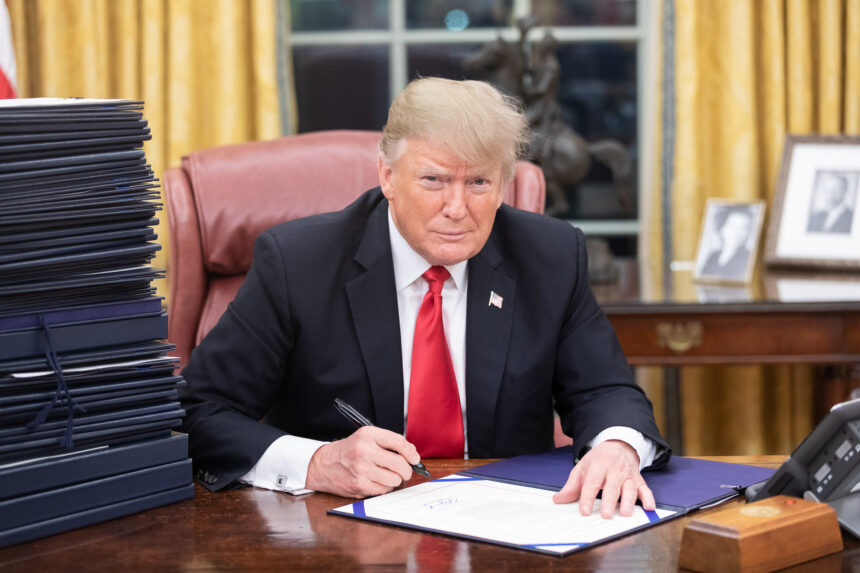
An executive order issued by President Donald Trump is poised to significantly affect more than 500,000 Social Security beneficiaries by eliminating paper checks for federal benefit payments. This shift, mandated by the executive order titled “Modernizing Payments To and From America’s Bank Account,” is set to take effect on September 30.
Since its inception in January 1940, Social Security has been a vital source of financial support for millions of Americans, initially aimed at assisting aging workers who could no longer support themselves. Over the decades, the program has expanded to include workers with disabilities and survivors of deceased workers. Currently, approximately 70 million individuals receive Social Security benefits monthly, yet the program continues to evolve.
The Social Security Administration (SSA) typically employs annual adjustments to reflect policy shifts, even though significant changes require a 60-vote majority in the Senate. Amid changing political tides following Trump’s second inauguration, the administration has announced various modifications to the Social Security program, with the most impactful being the transition from paper checks to digital payments.
As of now, only around 0.8% of Social Security beneficiaries, translating to over 500,000 individuals, still receive their payments via paper checks, making them the primary group affected by this change. The SSA has outlined three key reasons for the transition to digital payments:
-
Cost Efficiency: Issuing paper checks costs the government approximately $0.50 per check, while electronic fund transfers (EFTs) cost less than $0.15. This shift is projected to save the SSA over $2 million annually.
-
Speed of Delivery: Electronic payments are significantly quicker, providing beneficiaries with immediate access to their funds, compared to the potential delays associated with mailed paper checks.
-
Safety: The risk of theft or loss is substantially lower with electronic payments, with paper checks being 16 times more likely to be compromised.
Beneficiaries currently receiving paper checks are mandated to transition to direct deposit through a bank or credit union or opt for a Direct Express card, which is a prepaid debit card designated for receiving federal benefits.
Additionally, the Trump administration has implemented other changes to the Social Security program. On his first day in office, Trump established the Department of Government Efficiency (DOGE) to identify inefficiencies within the federal government, resulting in the SSA’s reduction of its workforce by thousands and the closure of several physical locations to cut down on costs.
Trump also influenced the appointment of Frank Bisignano as the SSA commissioner, a move intended to facilitate the agency’s shift toward more digital payment solutions. Moreover, to combat fraud and enhance security, the SSA updated its personal identification verification procedures. Starting in April 2025, beneficiaries will be required to make direct deposit changes in person or online through a secured account, rather than over the phone.
Furthermore, Trump has altered the rate at which Social Security overpayments are recovered. As the fiscal year ends on September 30, 2023, the Trump administration has set the recovery rate at 50%, in contrast to the 10% garnishment rate during the Biden administration.
While future shifts may lie ahead, the impending end of paper Social Security checks marks a significant update to the program, reflecting an overarching trend towards digitalization in federal payments.