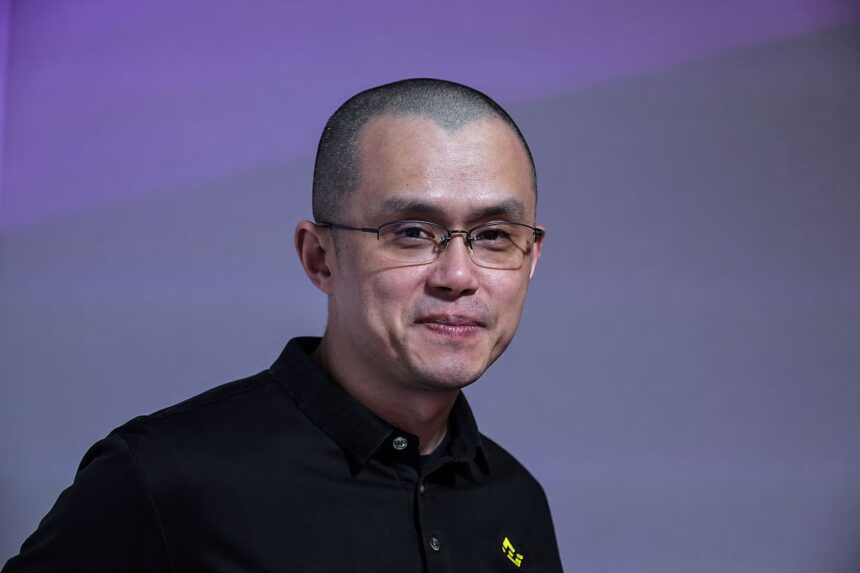
In a significant turn of events this year, Changpeng Zhao, the founder and former CEO of the world’s largest cryptocurrency exchange, Binance, issued a guilty plea for money-laundering violations. Following his admission of guilt, Zhao received a four-month prison sentence and was fined $50 million. Although he stepped down from his high-profile role at Binance, he retained ownership of the company. Recent developments, however, have flagged a potential comeback for Zhao, as he received a pardon from the Trump administration, which may clear his path back to leadership at Binance.
The administration asserts that Zhao’s pardon reflects a shift away from the Biden administration’s perceived adversarial stance toward the cryptocurrency sector. White House press secretary Karoline Leavitt stated that Zhao was targeted due to what she described as a “war on cryptocurrency” led by the previous administration, implying that this war is now over. However, critics argue that the pardon is more indicative of Trump’s broader pattern of leniency toward financial criminals, particularly when it benefits him or his associates.
Zhao’s legal issues stemmed not from complex cryptocurrency regulations but from older, traditional financial crimes. He was convicted for facilitating money laundering, not for engaging in speculative practices common in the crypto world, such as pump-and-dump schemes. Essentially, Zhao’s transgressions involved allowing illicit operations to exploit Binance for money laundering without taking sufficient steps to prevent it.
This case has drawn attention in light of the typically unsparing nature of presidential pardons in the U.S., particularly for financial crimes. A study revealed that a significant portion of pardon applications within the past two decades came from individuals convicted of fraud or other white-collar crimes. Historically, people convicted of such offenses have had higher rates of successful pardon applications than those convicted of violent crimes or other severe offenses.
Trump’s administration, however, has taken this to an unprecedented level. Since the beginning of his current tenure, he has granted pardons or commutations to 16 individuals involved in fraudulent activities. Among them are notable figures like Ross Ulbricht, the Silk Road founder, and Rod Blagojevich, a former governor charged with multiple counts of fraud. These actions have raised concerns about a broader trend in which financial criminals receive special treatment.
The rapid pace of Trump’s pardoning activity contrasts sharply with his predecessors, many of whom issued few or no clemencies within the initial years of their administrations. In contrast, Trump has granted multiple pardons for a range of financial offenses, indicating an ideological commitment to leniency toward financial malefactors.
One prominent figure still facing legal challenges is Sam Bankman-Fried, a former rival of Zhao, who is currently incarcerated after being convicted on fraud charges. Bankman-Fried has positioned himself as a victim of the Biden administration’s stance on crypto, which might influence potential pardon discussions. His case has been complicated by personal connections to significant figures within the legal system, which may affect public perception and potential clemency measures.
As the landscape of cryptocurrency continues to evolve in the U.S., Zhao’s pardon, alongside broader patterns of leniency, raises questions about the future of regulatory enforcement and accountability in the financial sector. The implications of these decisions could resonate within both the cryptocurrency realm and the wider financial community for years to come.