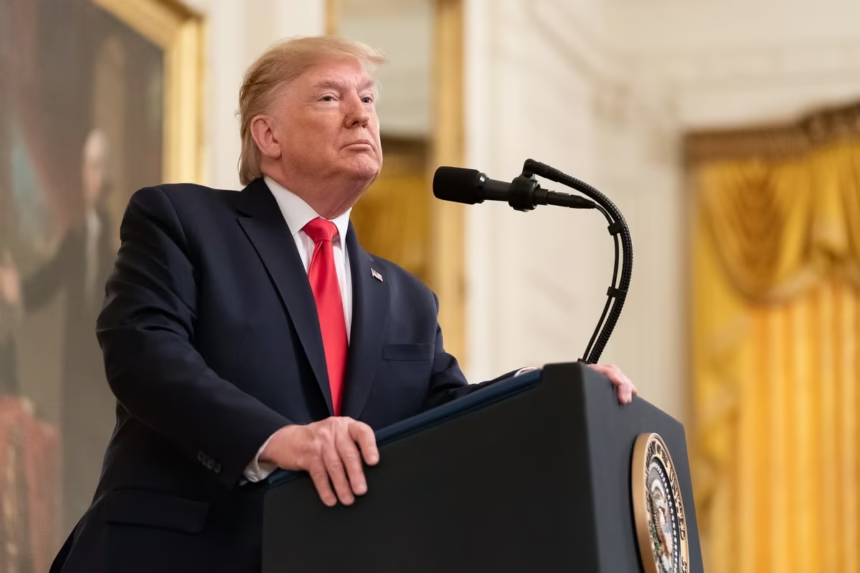
President Trump has consistently maintained a watchful eye on the stock market, frequently referencing its performance in his social media posts and public speeches. During his 2026 State of the Union address, he highlighted the stock market’s resilience, declaring, “The stock market is at 53 all-time record highs since the election.” This focus on market metrics suggests that the president uses stock performance as a measure of his administration’s success.
As the November congressional elections approach, speculation arises about how Trump’s policies could influence the stock market, especially if the market trends bearishly. One proposed method of invigorating market confidence is the potential suspension of tariffs. Historically, easing tariffs has resulted in market rebounds, leading to the creation of the acronym TACO—short for “Trump always chickens out.” Each time he has stepped back from imposing significant tariffs, stock prices have shown immediate recovery.
A temporary suspension of tariffs could indeed lead to a significant uptick in stock prices. Companies that have been absorbing the costs of tariffs would see an immediate benefit to their earnings. In addition, such a move could provide the Federal Reserve with greater leeway to lower interest rates, further boosting market performance. Fed Chair Jerome Powell has articulated concerns about tariffs contributing to inflation, mentioning the issue prominently in his March 2026 press conference.
Industries poised to benefit from potential tariff suspension include fashion and toy manufacturing, with companies like Nike and Mattel likely seeing gains. Industrial sector giants such as Caterpillar and Deere would also potentially reap the rewards of reduced import costs.
However, the anticipated effects of tariff suspension may not be as straightforward as initially thought. Although an initial spike in stock prices could occur, sustainability of that momentum remains questionable. The stock market faces various headwinds beyond tariffs, with geopolitical risks—particularly the ongoing tensions involving Iran—presenting a significant challenge.
Moreover, not all companies would benefit equally from tariff relief. Certain sectors may endure losses which could offset the gains seen in others, suggesting that any reaction in the market might result in sector-specific movements rather than a sweeping rally.
Another crucial factor is investor perception regarding the permanence of any tariff suspension. Given Trump’s clear preference for maintaining tariffs, any pause could be interpreted as a short-term strategy to alleviate political pressure rather than a long-term change in policy.
In light of these considerations, financial experts advise caution. While the possibility of Trump suspending tariffs exists, relying on this scenario as a primary investment strategy may prove unwise. Instead, investors are encouraged to focus on creating a diversified portfolio, ensuring a buffer against potential sector underperformance. Prioritizing investments in companies exhibiting financial robustness and strong pricing power is recommended.
Ultimately, maintaining a long-term perspective remains essential. Regardless of whether Trump’s policies lead to a market rally, a diversified and patient investment approach may yield favorable results, irrespective of the fluctuations stemming from political developments in Washington, D.C.