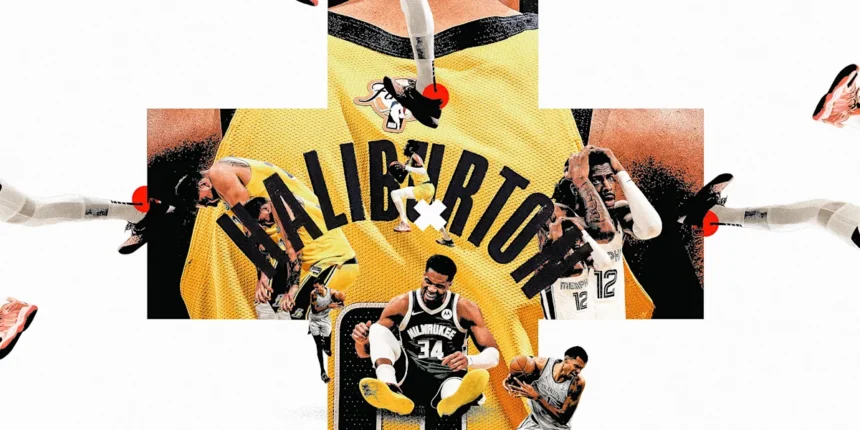
Tyrese Haliburton’s journey to recovery from a right calf strain leading up to Game 7 of the 2025 NBA Finals took a heartbreaking turn, as he attempted to restore himself for what was arguably the most significant game of his life. Engaging in multiple hyperbaric chamber sessions, H-Wave electrical stimulation, and around-the-clock treatment seemed to render him fit for play. Early in the game, Haliburton dazzled spectators by sinking three consecutive 3-pointers, giving the Indiana Pacers a 14-10 lead. To the casual observer, the calf appeared to be in good condition.
However, that reprieve was short-lived. With five minutes remaining in the first quarter, Haliburton’s worst fears came true: the largest tendon in his body ruptured as he pushed off his heel, resulting in an Achilles tear in close proximity to the previously injured calf. In disbelief, he slammed the hardwood, and as he was sidelined, the Oklahoma City Thunder surged ahead, eventually winning by 12 points.
This unexpected injury not only disrupted Game 7 but also sent ripples through the NBA landscape. The ramifications were far-reaching, akin to an earthquake’s aftershocks. Haliburton’s torn Achilles, preceded by a calf strain, joined the list of significant injuries that plagued the 2025 postseason, including those of stars like Damian Lillard and Jayson Tatum. Haliburton’s absence had a direct impact on the Pacers, who plummeted to a dismal record of 6-18 without their star player.
The 2025-26 season has already witnessed an alarming rise in calf strain injuries, affecting some of the league’s biggest stars, including Ja Morant, Victor Wembanyama, and Giannis Antetokounmpo, all of whom faced extended time on the sidelines due to calf strains. Injury expert Jeff Stotts from InStreetClothes.com revealed that injuries of this nature had surged by nearly 40% compared to the previous season’s first 20 games, with games lost due to these injuries tripling in number.
The market for services geared towards managing player health has become increasingly imperative. Dr. Richard Ferkel, a leading orthopedic surgeon and a consultant for the league, expressed concern that calf injuries could lead directly to more severe Achilles injuries, largely due to incomplete rehabilitation. He noted that the growth in the speed of the game and the intensified schedule increases the risks.
Unpacking the data on these injuries has prompted discussions among medical professionals and NBA executives alike. Teams have begun to adopt a more cautious approach in bringing players back from calf injuries. The increase in both the frequency and severity of these injuries has raised questions about the evolving nature of the game itself, with pressing concerns about whether the rigorous demands placed on athletes are sustainable.
Dr. Scott Ellis of the Hospital for Special Surgery highlighted the changing landscape of injuries within the NBA, stating that overuse appears to be a prominent factor behind the rise in calf strains and Achilles issues. Historically, Achilles tears were more common among older athletes; however, a surprising number of younger professionals are now facing these devastating injuries.
The influence of training regimens and evolution in gameplay can’t be ignored. Players like Stephen Curry, who have reshaped the game with their unique skill sets and movements, may unintentionally contribute to increased injury risks among younger athletes trying to emulate them. As the game continues to progress, the focus has turned toward understanding and mitigating the factors contributing to these injuries.
Amidst this backdrop of evolving training and injury data, organizations are embracing innovative technologies and methodologies. Companies like OnSport AI are pioneering efforts to utilize machine learning and tracking data to identify potential injury risks in real-time. This advancement, along with partnerships aimed at monitoring physical wellbeing, reflects the league’s commitment to addressing injury concerns seriously.
Finally, the dialogue around potentially reducing the 82-game schedule continues to gain traction. Limiting games might allow for adequate recovery and reduce the likelihood of injuries, accommodating a more sustainable model amidst the increasing demands faced by athletes. However, any change must navigate through significant economic realities and stakeholder interests.
As the NBA grapples with this crucial issue, the voices of players, medical professionals, and executives alike express their urgent desire for solutions, understanding that addressing the causes of these injuries is vital for the long-term health of the sport.