









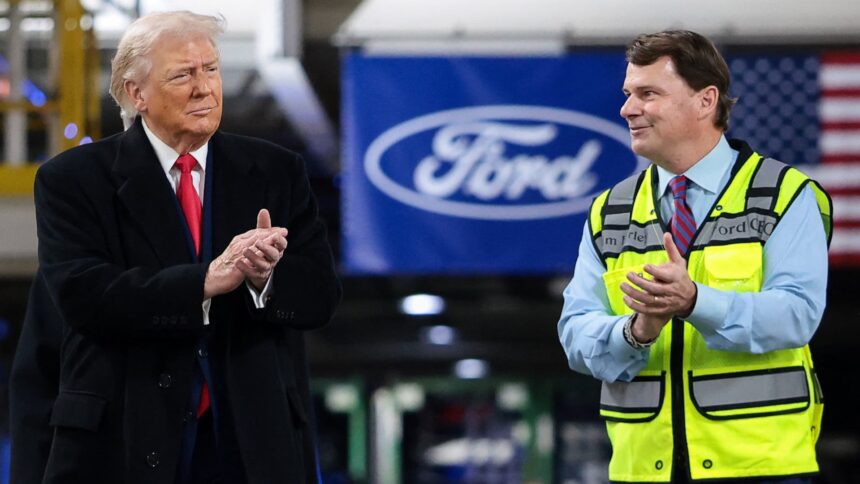
U.S. President Donald Trump recently visited a Ford production center in Dearborn, Michigan, where he was joined by Ford CEO Jim Farley amidst growing concerns regarding the automotive industry’s trajectory in 2026. The automotive sector, a vital component of the U.S. economy that constitutes approximately 4.8% of the gross domestic product, has been navigating a series of upheavals since the onset of the Covid-19 pandemic. The pandemic not only halted assembly plant operations but also triggered enduring supply chain disruptions, widespread semiconductor shortages, and shifting political landscapes, complicating efforts to transition to all-electric and autonomous vehicles.
Despite showing resilience, the industry now faces compounding difficulties: traditional issues like affordability and a decline in consumer demand are exacerbating the current challenges. Randy Parker, CEO of Hyundai North America, emphasized caution in addressing these dynamics, stating, “We’ve got to plan for the worst and hope for the best.” This sentiment resonates with many executives as they brace for an evolving automotive landscape that is likely to be more costly and unpredictable.
Current forecasts suggest that vehicle sales might remain stagnant or decline in 2026. Last year saw sales reach 16.3 million units, the highest since the pandemic began, yet it marks a decrease from the pre-pandemic average of over 17 million units annually. Ford CEO Jim Farley underscored the importance of monitoring consumer demand during an event at the Detroit Auto Show, indicating a widespread concern within the industry.
Topping the list of issues is the rising cost of new vehicles, which has soared significantly over the years. According to Cox Automotive, the average transaction price for new vehicles approached $50,000 at the end of 2025, marking a staggering 30% increase since early 2020. Historical data reveals that average transaction prices typically rise by 3.2% annually, but this rate nearly tripled to 9% during the pandemic years from 2020 to 2022. Erin Keating, a senior director at Cox Automotive, noted that pandemic-induced disruptions have fundamentally altered pricing structures, establishing a new baseline of elevated costs.
The economic strain extends beyond vehicle prices, with consumers grappling with inflation and escalating maintenance and insurance costs—insurance rates have seen an average uptick of 13% annually over the past five years. This cumulative increase has rendered vehicle ownership increasingly unattainable for many middle- and lower-income households. Recent figures indicate that purchasing the average new vehicle now requires 36.3 weeks of median household income, a significant rise from 33.7 weeks in late 2019.
In light of these challenges, automakers like Toyota are reassessing their strategies, focusing on lower-priced vehicle models rather than the premium offerings that dominated during the pandemic. David Christ, Toyota’s chief sales executive, acknowledged the impact of tariffs and trade policies on pricing, indicating a trend towards costlier vehicles across the industry.
Segments previously abandoned, like sedans, are regaining attention as manufacturers adjust to market realities. Ford’s emphasis on reintroducing sedans highlights a shift in strategy aimed at capitalizing on untapped market segments.
The affordability crisis has also caught the attention of lawmakers, with a Senate committee led by Senator Ted Cruz seeking to address these pressing issues through hearings with CEOs of major automakers. However, a scheduled hearing has faced delays due to scheduling conflicts and objections raised by Ford regarding the absence of Tesla’s Elon Musk.
Looking ahead, automakers remain on high alert for potential regulatory changes and trade negotiations, particularly concerning the upcoming discussions on the United States-Mexico-Canada Agreement (USMCA), which could reshape import tariffs and their competitive landscape.
Analysts are mixed in their outlooks for 2026, with UBS analyst Joseph Spak noting that while challenges persist, there are also reasons for cautious optimism in the automotive sector. General Motors, for example, has projected a more favorable outlook for 2026 in its financial forecasts, though uncertainty remains a dominant theme as the industry grapples with ongoing disruptions and evolving market conditions. Jefferies analyst Owen Paterson succinctly summarized the climate: “It is hard to imagine how 2026 could bring more external shocks and share price divergence than 2025.” As the automotive landscape continues to shift, both automakers and consumers alike are bracing for an unpredictable year ahead.