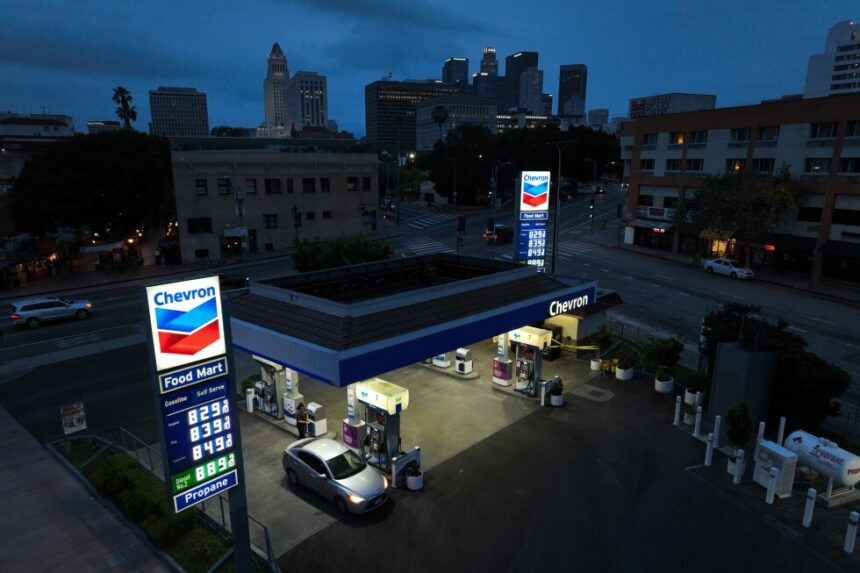
Drivers across the United States are grappling with fluctuating gas prices, which have surged to the highest levels seen since 2022. The ongoing conflict in Iran has exacerbated these price increases, pushing the national average for a gallon of gas above $4, as reported by AAA. This volatility leaves consumers navigating a complex landscape where prices can vary dramatically from day to day or even between neighboring stations.
The turbulence in the oil and gas market has left even gas station operators struggling to keep pace. Lonnie McQuirter, who runs the 36 Lyn Refuel Station in south Minneapolis, noted that his profit margins have thinned considerably. His station’s price for regular gas was posted at $3.399 per gallon, slightly lower than the metro average. “We price based on what we’re able to buy fuel at, and how well we can operate,” McQuirter explained, highlighting how external economic pressures dictate their pricing strategies.
Wholesale fuel prices are in constant flux, often changing multiple times a day, which complicates the situation for retailers like McQuirter. Factors such as rising credit card fees and increased maintenance costs on gas pumps have also contributed to the need for price adjustments. In times when consumers are feeling the financial strain, McQuirter emphasizes that small operators often feel compelled to act out of empathy rather than profit. “It really takes a toll when people are having to cut back on certain things in order to afford to live,” he said.
Several factors contribute to the high gas prices, many of which lie beyond the control of gas stations. According to the U.S. Energy Information Administration, crude oil accounts for nearly half of the retail gasoline price, while about 20% goes to refiners who process crude into gasoline. Recent spikes in crude oil prices, driven by geopolitical tensions and disruptions in transit routes, have led retailers to raise their pump prices in response to their increased costs. Taxes at federal, state, and local levels further add to the price at the pump, accounting for nearly 20%.
The dynamics of pricing can lead to significant variability from one gas station to another. For instance, California’s gas taxes and fees were around 71 cents per gallon last year, in contrast to just 9 cents in Alaska. Additional factors influencing price differences include the distance from refineries, the type of retailer, and the competitive landscape of the area.
Despite the nationwide sales of hundreds of millions of gallons daily, many retailers do not see substantial benefits from rising prices. The margins for retailers tend to shrink during price hikes, making it difficult for them to pass those increases on to consumers quickly. Conversely, when oil prices decline, gas stations may experience a marginal recovery, but the downward trend in prices usually occurs more slowly than the ascent. This meandering descent can negatively impact overall sales, as customers may curtail their spending on items besides fuel.
In the broader oil and gas supply chain, most profits are concentrated upstream, with extraction and refining companies reaping the majority of benefits. However, even these companies remain cautious; significant spikes in prices can ultimately dampen demand for their products, serving as a double-edged sword in a volatile market. The intricate web of factors influencing gas prices leaves both retailers and consumers in a challenging and uncertain environment.