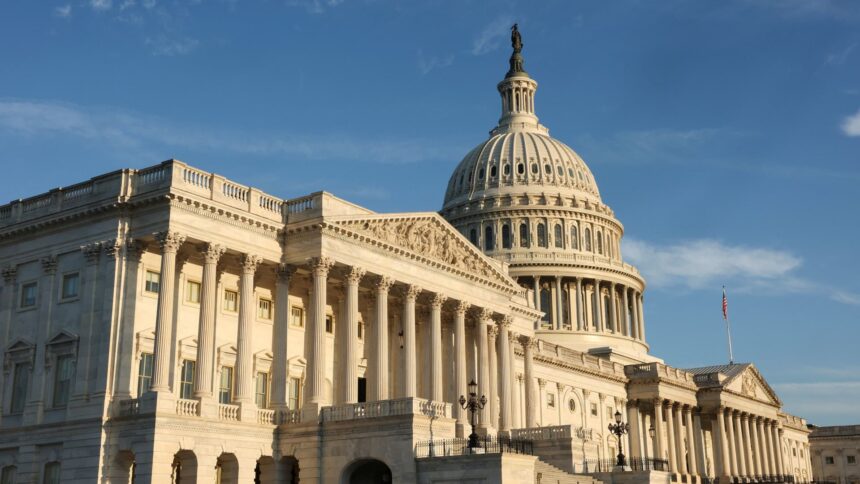
As morning light illuminated the U.S. Capitol on September 3, 2025, discussions around a significant legislative initiative, the Epstein Files Transparency bill, surfaced against a backdrop of escalating political uncertainty. This bill aims to facilitate the release of the remaining files tied to investigations concerning Jeffrey Epstein and Ghislaine Maxwell.
The U.S. government entered a shutdown on Wednesday, creating ripples across global markets as investors began to assess its potential ramifications on the broader economy. Traditionally, government shutdowns have minimal direct effects on capital markets; however, the timing of this closure raises critical concerns. Key U.S. jobs data, scheduled for release on Friday, will now be delayed, complicating the outlook for the Federal Reserve ahead of its imminent policy meeting. President Donald Trump further exacerbated the situation by suggesting that the shutdown could be leveraged to enact significant public sector job cuts.
With no clear resolution in sight, the duration of this shutdown remains uncertain. Historical context reveals that past prolonged shutdowns, particularly during Trump’s first term, offer a cautionary tale regarding their potential impact.
As the shutdown commenced, U.S. risk assets exhibited volatility. Gold prices surged to set a new record high, reflective of its status as a safe haven during uncertain times. Meanwhile, European stock markets showed incremental gains after a lackluster start, while Asian shares exhibited mixed performance. In contrast, U.S. 10-year Treasury yields fell by 4 basis points following an unexpected drop in private payrolls.
Market analysts expressed growing concerns regarding America’s institutional credibility, fiscal integrity, and perceived dysfunction. Luke Bartholomew, deputy chief economist at Aberdeen, highlighted the precariousness surrounding political interventions in the Federal Reserve’s operations, asserting that the central bank’s stewardship is vital for global capital markets.
Neil Birrell of Premier Miton noted that any extensive shutdown could suppress risk-on sentiment worldwide. He observed that investors are increasingly gravitating towards perceived safe haven assets, such as gold and silver, amid fears surrounding economic stability, especially given tight credit spreads and equity market valuations nearing their peaks.
In terms of foreign exchange, Joe Brusuelas, chief economist at RSM U.S., assessed the potential for the dollar to weaken due to the shutdown. He suggested that extended government closures might inadvertently pressure the currency and influence the Fed’s upcoming rate decisions, which in turn could impact global capital flows. Brusuelas also emphasized the potentially adverse effects on European industries reliant on U.S. demand, particularly within the automotive sector.
Despite the prevailing anxiety, analysts at UBS downplayed the shutdown’s potential to disrupt markets significantly, stressing that past events typically resulted in modest, temporary volatility. They argued that economic data delays resulting from the shutdown would not dramatically derail the Fed’s easing progress, which is currently anticipated to include a rate cut at the end of October.
In summary, while the government shutdown unfolds, analysts suggest that market participants focus on other influential dynamics, such as ongoing Federal Reserve rate cuts, corporate earnings trends, and advancements in artificial intelligence, rather than dwelling on short-term shutdown fears.