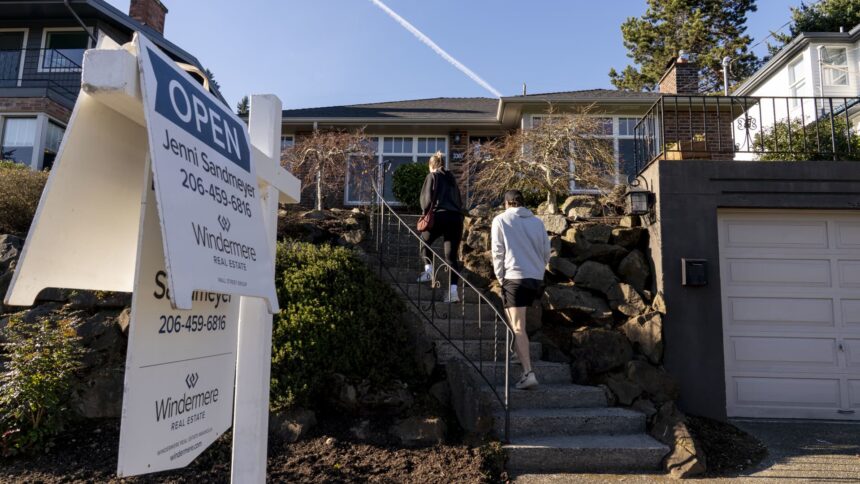
High home prices, dwindling supply, and diminishing consumer confidence are currently exerting significant pressure on the U.S. housing market, leading economists to label the situation as a “new housing crisis.” Lawrence Yun, the chief economist for the National Association of Realtors (NAR), emphasized the severity of the current circumstances during a recent analysis.
In January, sales of previously owned homes plummeted by 8.4% from December, reaching a seasonally adjusted annualized rate of 3.91 million. This figure is not only 4.4% lower than the same month in the previous year, but it also marks the slowest sales pace recorded since December 2023. The drop represents the largest monthly decline observed since February 2022, a worrying sign for the market. These figures reflect closings based on contracts likely signed in November and December, a period when the average rate for a 30-year fixed mortgage was relatively stable before dropping to 6.1% in January, according to Mortgage News Daily.
Regionally, the decline in sales has been felt nationwide, with the South and West experiencing the steepest drops. While Yun noted that affordability conditions are gradually improving—highlighted by NAR’s Housing Affordability Index, which indicates that housing has become the most affordable it has been since March 2022—challenges remain. The improvements are attributed to wage growth outpacing home price increases and reduced mortgage rates compared to a year prior. However, the inventory of homes for sale remains low, prompting concerns that it has not kept pace with buyer demand.
Yun pointed out that potential buyers continue to face challenges, stating bluntly that “renters are not participating in housing wealth.” He describes the current market as a crisis primarily because of stagnation, noting that many Americans feel trapped in their housing situations.
Inventory levels saw a decline in January compared to December, although there was a 3.4% year-on-year increase. By the end of January, there were 1.22 million homes on the market, translating to a 3.7-month supply at the current sales pace. A balanced market is typically identified by a six-month supply of homes for sale. This tight supply has allowed home prices to remain elevated; the median sale price for homes in January was recorded at $396,800, which is a 0.9% increase from the previous year and marks the highest January median price on record.
Homeowners are reportedly in a stable financial position, with estimates indicating a typical homeowner has accrued approximately $130,500 in housing wealth since January 2020. However, homes are taking longer to sell compared to last year, with the average sale time increasing to 46 days in January from 41 days in January 2025.
First-time buyers accounted for about 31% of sales, showing an uptick from 28% a year prior. Interestingly, sales in the higher-end market—specifically homes priced at $1 million and above—have been the only segment to experience growth compared to last year. In contrast, the market for homes priced below $250,000 has seen the steepest declines.