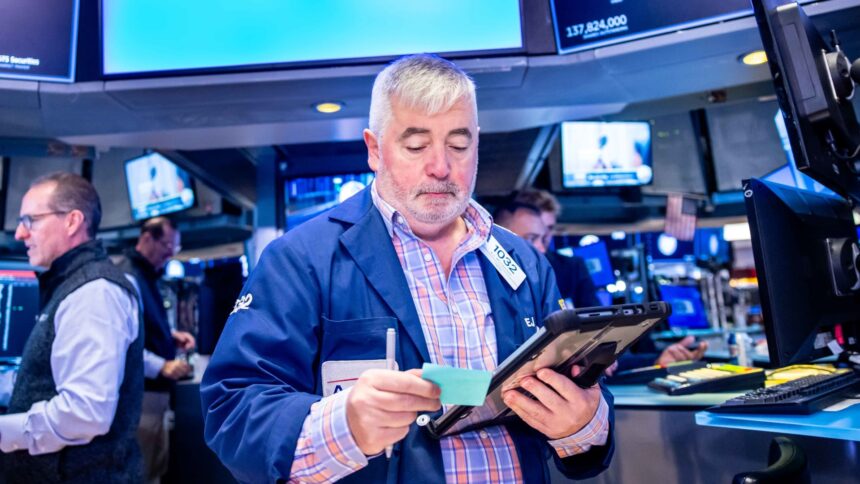
Traders on the floor of the New York Stock Exchange are facing a turbulent market as recent employment data reveals significant job losses in the U.S. for October. According to figures released by outplacement firm Challenger, Gray & Christmas, the number of job cuts is nearly double that of September, marking the most substantial decline for October since 2003. The technology sector bore the brunt of these layoffs, with over 33,000 job cuts reported, a staggering increase compared to the previous month’s figures.
For many in the tech industry, the experience of being laid off amidst advancements in technology can feel particularly ironic and disheartening. These workers are often in positions related to the very innovations that, while designed to drive efficiency, may ultimately displace them.
Amidst this backdrop of uncertainty, Elon Musk, CEO of Tesla, emerged as a noteworthy exception. Recently, shareholders approved a nearly $1 trillion pay package for Musk, although access to the entire amount hinges on achieving specific performance targets. Notably, these goals include propelling Tesla to an $8.5 trillion valuation—an ambitious leap considering the company’s current market capitalization stands at approximately $1.54 trillion.
In the tech sector, Nvidia has captured the spotlight, briefly reaching a $5 trillion valuation last week. However, following a downturn in tech stocks, Nvidia’s market cap has since fallen to $4.57 trillion. Other prominent companies, including Microsoft, Broadcom, and Palantir Technologies, also saw significant declines amid concerns regarding inflated stock prices. The cumulative effect of these shifts caused the tech-heavy Nasdaq Composite index to drop by 1.9%.
For many tech workers and investors, Thursday served as a harsh reminder of the inherent volatility within the market. In stark contrast, for Musk, it was merely another step on a trajectory toward unprecedented financial heights.
In a broader context, Gulf monarchies, known for their oil-driven wealth, are reassessing their financial strategies. With crude prices remaining low, some regional leaders are pivoting towards investing in domestic artificial intelligence industries. This shift reflects a desire to diversify their economies and leverage sovereign capital for future growth amidst changing market dynamics.