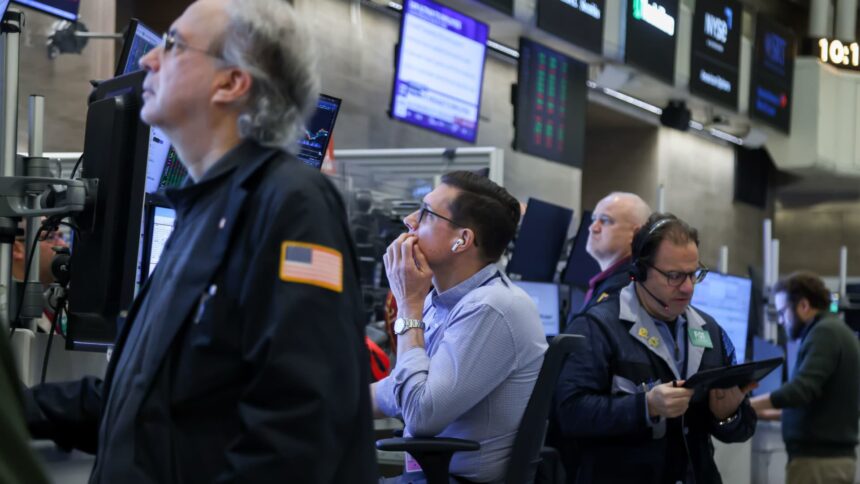
U.S. stock markets closed on a positive note recently, with Big Tech stocks showing notable recovery. Oracle led the gains with a remarkable jump of 9.6%, while Microsoft also saw a solid increase of 3.1%. These movements contributed to the S&P 500 rising by 0.47% and the tech-heavy Nasdaq Composite climbing 0.9%. The Dow Jones Industrial Average managed to tick up 0.04%, achieving yet another record close.
In the Asian markets on Tuesday, equities generally mirrored Wall Street’s upward trend, with Japan’s Nikkei 225 outperforming its regional peers by gaining over 2%. This rise is attributed to ongoing investor optimism surrounding Prime Minister Sanae Takaichi’s economic initiatives, referred to as the “Takaichi trade.”
Despite these gains in U.S. and Asian markets, concerns surrounding capital expenditures and financing continue to loom large over major technology firms. Alphabet recently cautioned in its annual financial report that it might face “excess capacity” in its data centers if market conditions deteriorate. Nevertheless, the parent company of Google plans to proceed with raising $20 billion through a U.S. dollar bond sale, which will reportedly include a long-term 100-year bond denominated in sterling, according to sources familiar with the negotiations.
In a notable update within the tech sector, ChatGPT appears to have regained momentum, with CEO Sam Altman announcing that the platform is “back to exceeding 10% monthly growth.” If the overall industry can sustain this level of growth, Alphabet may not encounter issues related to excess capacity in the near future.
On the commodities front, oil prices saw a slight decrease on Tuesday, even as the European Union prepared to impose sanctions on Indonesian and Georgian ports regarding their handling of Russian oil, according to reports.
As European markets opened, several key companies were in the spotlight for upcoming earnings reports, including AstraZeneca, Barclays, and Kering. In Hong Kong, shares of Standard Chartered dropped by 3.4% due to the unexpected departure of Diego De Giorgi, who had been seen as a frontrunner for the bank’s leadership role.
In geopolitical news, Taiwan’s Vice Premier Cheng Li-chiun emphasized the challenges of relocating 40% of the chip supply chain from Taiwan to the U.S., pushing back against stated U.S. targets for onshoring, as highlighted by Secretary of Commerce Howard Lutnick in a January interview. Meanwhile, China condemned the recent expansion of a scheme by the UK that allows Hong Kong residents to apply for a British National Overseas visa, labeling it as “despicable.” This backlash came shortly after pro-democracy media tycoon Jimmy Lai received a 20-year prison sentence in Hong Kong.
Additionally, the U.S. government has issued warnings for ships to maintain a safe distance from Iranian waters, following reports of boarding attempts and aggressive maneuvers against commercial vessels.
Back in the U.S. markets, the S&P 500 recorded consecutive gains, reflecting positive momentum across major indexes, including a record close for the Dow. In the Asia-Pacific region, notable movements included an 11.95% surge in shares of Softbank Group, while Hanwha Aerospace saw a decline of over 6%.
In a significant market shift, two stocks are transitioning from bitcoin mining operations to providing data centers for AI companies, with forecasts suggesting their share values could potentially double, according to insights from Morgan Stanley.
Lastly, fluctuations in gold and silver prices are creating trading opportunities for algorithm-driven traders and machine-learning funds, as these assets continue to experience significant price volatility. Trend-following strategies are being employed to capitalize on this environment across various futures markets, including equities and commodities.