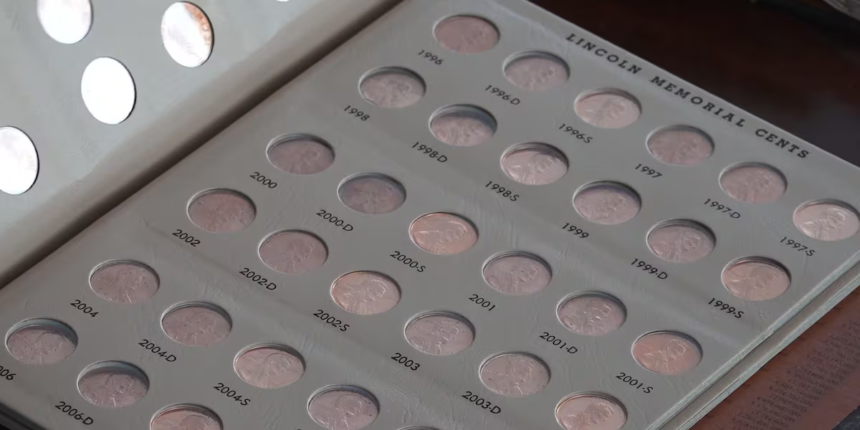
The U.S. Mint’s decision to cease penny production has prompted increased interest among coin collectors regarding which coins to keep and which ones to spend. Veteran collector Dave Sorrick, who represents the National Numismatic Association and is a member of the Ozark Coin Club, expressed his sentiments on the phasing out of the penny, stating, “The cent has always been a very, very powerful coin. And it’s a shame to see it phased out.”
With the Philadelphia Mint halting penny production, Sorrick advised collectors to hold onto certain older coins, particularly those minted in 1958 and earlier, known as wheat cents, which are well-regarded among collectors. These coins are often the starting point for many in the hobby. Sorrick explained that pennies minted from 1959 to 1981 were made of copper, which adds to their collectible nature.
However, despite their historical significance, the immediate financial return on such coins may not be substantial. Jeff Ford from Springfield’s Patriot Gold and Silver noted that there is currently limited buyer interest in wheat cents and other older pennies, citing the copper value of these coins as being two and a half to three cents. Ford mentioned their purchasing rates, stating they pay two cents for regular wheat cents and sell them for four cents, underlining that there isn’t much profit to be made.
In contrast, Sorrick highlighted that pennies minted after 1981 are unlikely to gain significant value, making them more suitable for spending, particularly during a time when many businesses are experiencing coin shortages. “The average American family, they say, has about $80 worth of loose change around the house, in the car, in the sofa cushions, wherever it is,” Sorrick shared. He emphasized the importance of circulating this spare change, deeming it a responsible action.
Looking to the future, Sorrick speculated that the U.S. Mint may produce special commemorative pennies in light of America’s upcoming 250th anniversary. He anticipates the creation of a unique Lincoln cent struck in San Francisco as part of the semi-quincentennial celebrations in 2026.
The halt of penny production signifies a notable shift in American currency, sparking a renewed focus on the value and legacy of coins in circulation. Collectors and enthusiasts are now navigating these changes, emphasizing both the historical importance of specific coins and the necessity of keeping currency flowing in everyday transactions.