



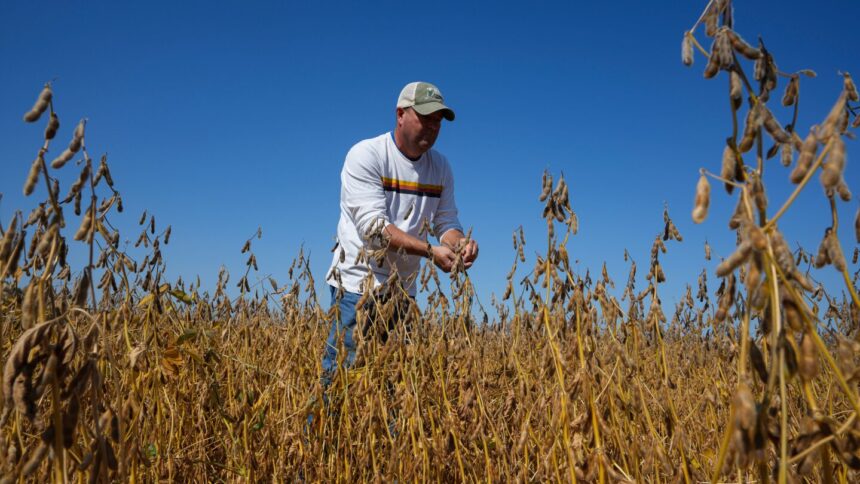
In Magnolia, Kentucky, soybean farmer Caleb Ragland faces a deeply concerning reality as his crops reach maturity. The anticipated harvest season is here, yet uncertainty looms over where he and countless other farmers will sell their produce. The cause of this distress? China’s halt on soybean purchases, a significant blow to the U.S. agricultural sector.
Historically, China has been a major buyer, purchasing about a quarter of all U.S. soybeans. However, in response to high tariffs imposed by the Trump administration, Beijing has effectively boycotted American soybeans, further complicating negotiations for a comprehensive trade agreement. Ragland, who also leads the American Soybean Association, has described the situation as a “five-alarm fire” for the industry, stressing that it could even test long-standing loyalties to Trump among farmers.
As trade talks unfold—having included four rounds between May and September without substantive progress—anxiety continues to build. Jim Sutter, CEO of the U.S. Soybean Export Council, expresses concern about the urgency of the situation as harvest approaches.
Political pressures are mounting following Trump’s tariffs on Chinese goods, prompting retaliatory tariffs of up to 34% on U.S. soybeans. This has rendered American soybeans less competitive when compared to those from other countries. In 2022, China imported nearly $12.5 billion worth of U.S. soybeans, a stark contrast to the second-largest buyer, the European Union, which accounted for just $2.45 billion. Alarmingly, this year has seen no soybean imports from the U.S. by China since May.
As farmers grapple with the repercussions of these trade dynamics, they are increasingly looking for assurances from the Trump administration. The president has indicated that he may offer an aid package similar to those during his first term, although many farmers express a strong desire for sustainable market solutions rather than short-term handouts. Brian Warpup, a fourth-generation farmer from Indiana, voices this sentiment, emphasizing that farmers prefer the dignity of hard work over financial aid.
Ragland articulates the collective yearning for reliable markets, urging Trump to prioritize lasting trade agreements. He fears for the future of both his farming legacy—hoping that his sons will cultivate the land as the tenth generation—and the broader agricultural community as they face mounting challenges.
Farmers entered the year hoping to merely break even, confronted by rising costs alongside low crop prices. Trump’s tariffs have exacerbated these issues, driving prices down and inflating costs for necessary supplies such as steel and fertilizer.
In the face of these challenges, some farmers retain a degree of optimism regarding the potential for a favorable trade resolution, although patience is waning with the prolonged negotiations. Darin Johnson, president of the Minnesota Soybean Growers Association, reflects the sentiment of many when he expresses hope but also frustration at the ongoing delays.
China’s strategy of withholding soybean purchases appears intentional as it seeks leverage in trade discussions. The U.S. soybean market has become intertwined with Chinese demand, a relationship that emerged during the 1990s amidst China’s economic expansion. Now, with domestic production unable to meet current needs, China has turned to Brazil and other South American countries, drastically reducing U.S. market share.
In light of these developments, farmers are exploring new markets and diversifying their customer base. Recent efforts include a commitment from Taiwan to purchase $10 billion in agricultural products over the next four years, and initiatives to bolster domestic consumption through increased biodiesel production and research into new uses for soybeans.
Despite ongoing diversification efforts, many industry leaders, like Iowa farmer Robb Ewoldt, acknowledge that replacing the Chinese market overnight is unrealistic. He emphasizes the need for a measured approach as the U.S. agricultural community navigates these turbulent times.