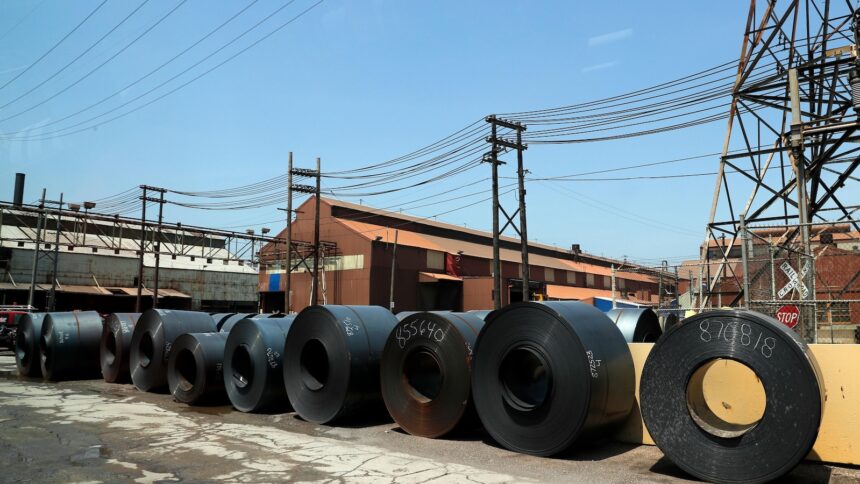
In a surprising turnaround, U.S. Steel announced that it will continue processing raw steel at its Granite City Works plant in Illinois. This decision effectively reverses a previous plan to halt operations at the facility in the coming weeks. The company has not provided details regarding the reasons behind this change, especially given that it follows closely on the heels of a deal that saw Nippon Steel purchase the American steelmaker.
The agreement with Nippon Steel, which included giving the U.S. government oversight over certain decisions impacting domestic steel production, created a complex backdrop for U.S. Steel’s initial intentions to cease operations. The spokesperson for U.S. Steel indicated that the company will supply raw steel slabs to Granite City “indefinitely,” marking a shift in its earlier strategy aimed at preserving operational flexibility.
In its previous communications, U.S. Steel argued that ending operations at Granite City was necessary to maintain future flexibility. However, in the recent statement, the company expressed satisfaction in finding a solution that allows continued slab consumption at the facility, without detailing what that solution entails.
The United Steelworkers union, which had opposed Nippon Steel’s acquisition of U.S. Steel, reacted strongly to the change. They accused the steelmaker of attempting to backtrack on commitments made under the Nippon Steel agreement. The union reiterated its position, stating that they would not allow U.S. Steel to evade its responsibilities. They had mobilized political allies and planned a rally to demonstrate their determination to safeguard their interests, highlighting their commitment to advocating for the workforce.
Despite the operational changes, U.S. Steel has assured that there will be no layoffs among the approximately 800 workers at the Granite City facility, nor will there be any reduction in pay until 2027, when specific protections under the Nippon Steel agreement are set to expire. The Granite City Works plant is known for producing rolls of sheet steel essential for various industries, including construction, automotive, and piping.
In recent years, U.S. Steel has faced challenges in maintaining production at Granite City, as evidenced by the idling of its last operational blast furnace earlier this year. The facility had previously seen the shutdown of another blast furnace as far back as 2019. U.S. Steel also operates similar processing plants at its Mon Valley Works in Pennsylvania and Gary Works in Indiana.
The acquisition process initiated by Nippon Steel was protracted, influenced heavily by national security concerns that extended the timeline well beyond the approval by U.S. Steel shareholders. Eventually, the negotiations concluded with compromises, including increased investment commitments from Nippon Steel and a “golden share” provision, which would allow the federal government to influence critical decisions moving forward.