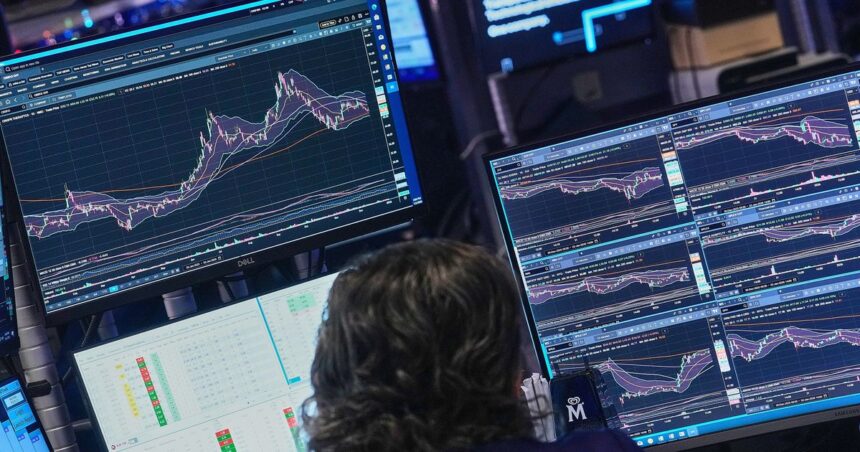
U.S. stock indexes experienced a downturn on Wednesday, largely influenced by mixed profit reports from major financial institutions, contributing to an overall decline in investor confidence.
The S&P 500 dropped 1%, marking its second consecutive day of losses following a recent peak. The Dow Jones Industrial Average decreased by 248 points, or 0.5%, as trading progressed, while the Nasdaq composite fell 1.5%.
Wells Fargo significantly impacted the market, witnessing a 4.5% drop after reporting weaker-than-expected profits and revenue, attributed to lower trading fees and various other factors. Similarly, Bank of America saw a 4.7% decline despite exceeding profit expectations; investors expressed concerns over upcoming expenses. Citigroup also suffered a 3% decrease following its profit report amid ongoing efforts by Chair and CEO Jane Fraser to steer the company through a turnaround.
In light of soaring stock prices, analysts assert that companies across sectors must demonstrate robust profit growth. Forecasts indicate that S&P 500 businesses are expected to report earnings per share for the last quarter of 2025 that are approximately 8% higher year-over-year, according to FactSet.
Biogen’s stock plunged by 5% after the biotechnology firm announced it anticipates a decline in profits for the fourth quarter of 2025 due to escalating research and development expenses.
The technology sector felt considerable pressure as well, seeing some declines after significant gains driven by a surge in artificial intelligence developments. Nvidia fell by 2.3%, and Broadcom experienced a 4.6% drop.
Nonetheless, the S&P 500’s losses were somewhat mitigated by gains from oil companies like Exxon Mobil, which rose 1.9%, and Chevron, which climbed 1.7%. This was spurred by a 0.9% increase in the price of a barrel of benchmark U.S. crude, contributing to a year-to-date gain exceeding 7%. Oil prices have been bolstered by ongoing protests in Iran, a key OPEC member, raising concerns about potential production disruptions.
Additionally, gold prices rose 0.4%, inching closer to a record high, as market anxiety persisted. In the bond market, Treasury yields decreased as investors gravitated toward safer assets. Various economic reports painted a mixed picture of the U.S. economy.
One report indicated that consumer spending at U.S. retailers in November surpassed economists’ expectations, a potentially positive sign for the economy’s core driver. However, additional data revealed underlying concerns. A separate report indicated modest price increases at the wholesale level, aligning with a previous finding that inflation at the consumer level remained above the Federal Reserve’s 2% target, despite being close to expectations.
Another report highlighted an unexpected rise in existing home sales, suggesting stronger-than-anticipated demand. Collectively, these factors did little to alter Wall Street’s outlook, with expectations suggesting that the Federal Reserve may reduce its main interest rate at least twice by mid-year to support the job market.
The yield on the 10-year Treasury fell to 4.14% from 4.18% late Tuesday, reflecting investors’ cautious sentiment.
In global markets, Japan’s Nikkei 225 rose by 1.5% to reach another record high, with growing anticipation surrounding potential general elections prompted by Prime Minister Sanae Takaichi. Other international indexes appeared mixed, with Hong Kong stocks gaining 0.6%, while Shanghai experienced a 0.3% decline following a report indicating that China’s trade surplus surged by 20% in 2025, marking a record high despite ongoing tariffs imposed by the U.S.