The U.S. stock market experienced significant fluctuations throughout 2025, beginning with a tumultuous start but gaining momentum that led the S&P 500 to reach unprecedented heights. Despite facing challenges such as tariffs and pessimistic forecasts from the Federal Reserve, analysts remained optimistic that the market would continue its upward trajectory into 2026. However, geopolitical tensions, particularly after the White House’s involvement in the Middle East conflict, introduced fresh volatility into the market.
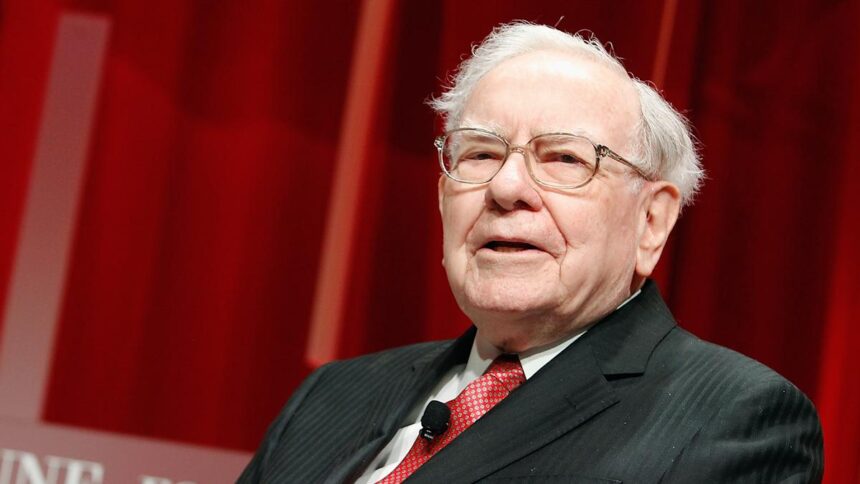
A well-known metric, often referred to as the Buffett Indicator, has raised alarms amongst investors. This indicator compares the total U.S. stock market capitalization to the country’s GDP, providing a gauge for potential market bubbles. Currently, the Buffett Indicator is at a staggering 230%, surpassing levels seen during the dot-com boom, signaling that stocks may be “Strongly Overvalued” in relation to the economy. Warren Buffett himself has endorsed this indicator as a reliable measure of market valuations.
The current high reading of the Buffett Indicator suggests that the stock market may be approaching dangerous levels. Buffett advises caution, indicating that when this ratio exceeds 200%, investors should reconsider their strategies. Rather than aggressively investing in U.S. equities, Berkshire Hathaway, under Buffett’s guidance, has been sitting on substantial cash reserves — $373.3 billion at the end of 2025 — marking a slight decrease from the previous year but still reflecting a conservative stance.
Echoing Buffett’s concerns, Jerome Powell, chair of the Federal Reserve, cautioned that stocks might be “fairly highly overvalued.” Additionally, Leon Cooperman, chairman and CEO of Omega Family Office, expressed apprehension about overpricing in the market, particularly amid global uncertainties such as the ongoing war in Iran, which he believes could lead to stagflation or recession.
In response to rising equity valuations, many investors are looking toward alternative assets. Gold has seen a record performance in 2025, traditionally viewed as a safe haven during economic turmoil. Notably, Ray Dalio, founder of the world’s largest hedge fund, emphasized the importance of including gold in investment portfolios to mitigate risks associated with market downturns.
For investors seeking to incorporate gold into their portfolios, options like gold IRAs present a viable pathway. These accounts allow for holding physical gold or gold-related assets within a retirement plan, offering a combination of tax benefits along with the security of gold.
Real estate also remains a steadfast investment avenue, unaffected by stock market volatility. High-quality real estate can provide consistent income through rent, allowing for passive income regardless of market cycles. Platforms like Arrived enable individuals to invest in shares of vacation homes or rental properties with minimal capital, democratizing access to the real estate market.
Another investment platform, Lightstone DIRECT, connects accredited investors with multifamily real estate opportunities, eliminating middleman fees and offering direct partnership with a firm that has an established history of delivering strong returns.
As the stock market continues to show signs of volatility, it’s essential for investors to diversify, especially those nearing retirement. Historical trends reveal that downturns can have lasting impacts on savings, underscoring the importance of a well-rounded investment strategy. Experts predict that annual returns for the broad market may be disappointingly low in the coming decade, adding further urgency to the need for diversification.
Moreover, investing in art has gained popularity among high-net-worth individuals as a hedge against market fluctuation. Platforms like Masterworks allow investors to buy fractional shares of significant artworks, showcasing the potential for high returns while diversifying away from traditional assets.
In summary, as the market faces substantial uncertainty, investors are encouraged to explore alternative investment avenues and assess their strategies in light of the current economic climate, keeping a close eye on valuations and the implications of global events.