Despite the soaring valuations of major tech stocks, a top economist believes the U.S. stock market has yet to enter a financial mania. Owen Lamont, a portfolio manager at Acadian Asset Management and a former finance professor at the University of Chicago, argues that one key indicator of a market bubble—the exit of “smart money”—is conspicuously absent.
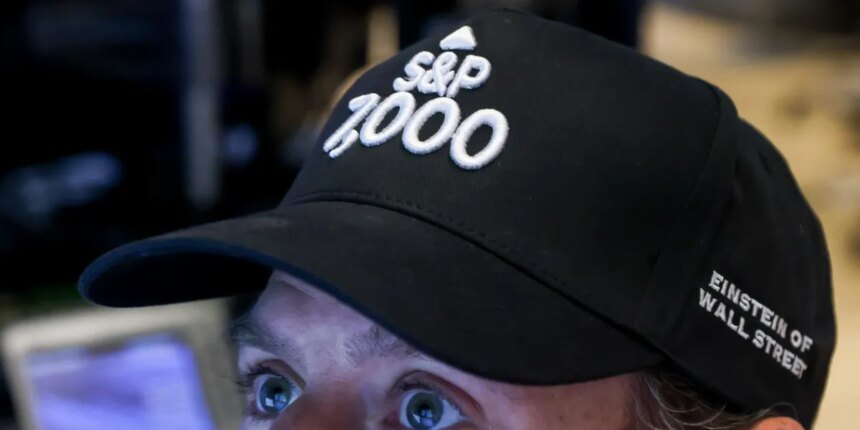
In a recent conversation, Lamont pointed out that while sentiment may feel exuberant and the S&P 500 has recently crossed the 7,000 mark, we are not currently in an AI bubble. Historically, significant equity issuance tends to signal the onset of a bubble, where corporate insiders start selling their overvalued stocks to the public. Lamont remarked, “Part of the reason I think there’s not a bubble is I don’t see the smart money as acting like there’s a bubble. Maybe I should say there’s not a bubble yet.”
Lamont identified the lack of initial public offerings (IPOs) in the current market as a crucial factor distinguishing it from previous bubbles, such as the dotcom boom in 2000 and the speculative fervor of 2021. During those periods, a surge in IPOs characterized excessive enthusiasm. Instead, he noted that corporations today are buying back shares, with U.S. companies engaging in roughly $1 trillion worth of stock buybacks over the past year. This suggests that companies, which he refers to as “the smart money,” perceive their stocks as undervalued, contrasting sharply with the typical behavior seen during a bubble.
In discussing his methodology for identifying bubbles, Lamont referenced the “Four Horsemen” framework: overvaluation, bubble beliefs, issuance, and market inflows. While he acknowledged that overvaluation and retail investor enthusiasm are evident, the lack of new equity issuance disqualifies the current market cycle as a bubble. He expressed surprise at the absence of IPOs, noting that significant IPO activity often accompanies market transitions.
Drawing on historical lessons, Lamont highlighted instances of extreme valuations in previous market cycles, including Japan’s stock market bubble in the late 1980s. He pointed to the Shiller CAPE ratio, an indicator measuring the price of stocks relative to long-term earnings, which is substantially lower today than during those highs. Although Lamont recognizes that market conditions are high, they do not mirror the wild extremes seen in prior speculative periods.
Reflecting on his experiences, Lamont asserted that bubbles often arise from behavioral phenomena, where investors make irrational decisions fueled by misplaced optimism. He expressed concerns that while the current economic environment shows promising technological advancements, it has not yet reached a point where corporate insiders are fleeing the market.
Lamont humorously critiqued the lack of innovation in fraudulent schemes among companies, contrasting today’s market with previous years that saw a profusion of questionable IPOs. Despite skepticism over the returns on significant investments in artificial intelligence by major tech firms, he considered these capital expenditures a rational gamble for corporate growth rather than a flash in the pan of speculative mania. He likened the current surge in AI investment to past booms in transformative technologies.
Looking ahead, Lamont suggested that the landscape of IPOs may shift dramatically by 2026, particularly if major private companies, such as SpaceX, decide to go public. This could serve as a harbinger of a looming market peak. Notably, reports have emerged about major private equity firms preparing for significant IPO activity, with Blackstone planning one of its largest IPO pipelines in history.
Market analysts are increasingly contemplating the dawn of a new IPO cycle, one that may surpass the frenetic activity of previous years, setting the stage for substantial deal volume and valuation targets. As the tech sector continues to evolve, Lamont’s insights serve as a reminder of the intricate balance between valuation metrics and market sentiment—key indicators that will dictate whether we are indeed on the brink of a new financial era or simply riding a wave of speculative enthusiasm.