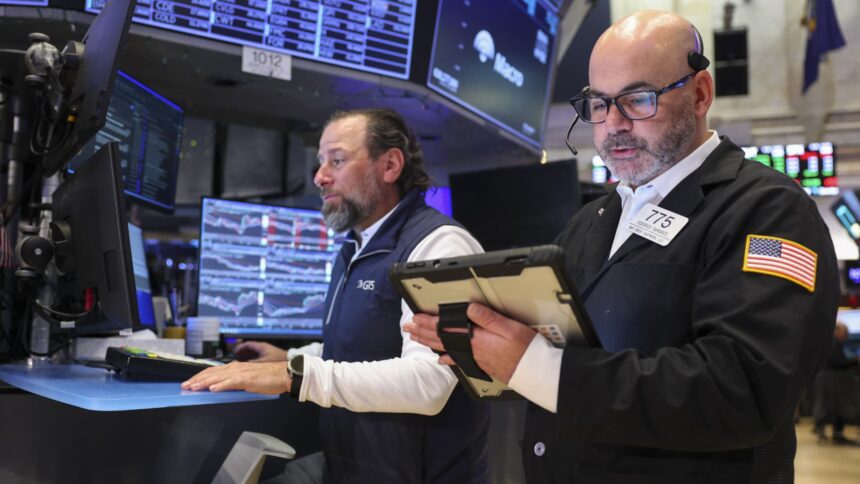
Traders on the floor of the New York Stock Exchange reacted positively Tuesday night, with stock futures rallying after news surfaced regarding potential peace negotiations between the U.S. and Iran. S&P 500 futures climbed by 0.7%, while Nasdaq 100 futures saw an even more significant increase of 0.8%. Futures associated with the Dow Jones Industrial Average gained 318 points, reflecting a 0.7% rise.
Despite this after-hours gain, all three major stock averages experienced setbacks during the regular trading session. The S&P 500 closed down by 0.37%, the Nasdaq Composite fell by 0.84%, and the Dow declined by 84.41 points, translating to a decrease of 0.18%. The day’s trading followed comments made by President Donald Trump, who indicated that the U.S. is actively engaged in negotiations with Iran. He remarked that Tehran appeared to be “talking sense” and seemed interested in forging a peace agreement.
A report from The New York Times revealed that the U.S. had sent Iran a comprehensive peace plan aimed at resolving ongoing conflicts, citing two unnamed officials. This 15-point plan was reportedly transmitted via Pakistan, heightening speculation about a potential thaw in relations between the two nations.
The market movement indicated a volatility reminiscent of previous days, particularly after a strong market rally on Monday when all three averages surged more than 1%. This rebound was fueled by Trump’s statements on social media claiming productive discussions with Iran regarding a “complete and total resolution” to hostilities in the Middle East. However, Iranian state media subsequently denied any direct talks occurred.
Additionally, oil prices resumed their upward trajectory Tuesday, following a slight decline the previous day. Michael Kantrowitz, chief investment strategist at Piper Sandler, offered insight into current market dynamics, emphasizing that oil prices and interest rates are primary drivers of equity movement at this time. He noted, “We continue to see this as just an oil-driven, one-variable market,” suggesting that market responses would hinge on evolving economic conditions. Kantrowitz expressed less concern about the economy’s capacity to withstand rising oil prices but highlighted potential worries related to interest rates and persistent inflation impacting equity valuations.
Looking ahead, traders are set to scrutinize upcoming earnings reports from notable companies such as Chewy and Paychex, scheduled to be released Wednesday before the market opens. Additionally, investors will be keenly awaiting February’s figures on export and import price indexes, which could further influence market sentiment moving forward.