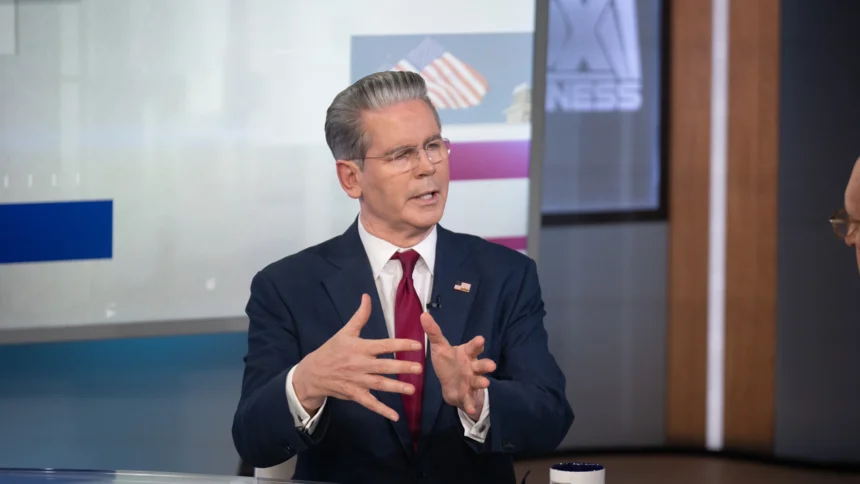
In a recent address during a House Financial Services Committee hearing, U.S. Treasury Secretary Scott Bessent unequivocally stated that the federal government has no intentions or authority to provide a bailout for Bitcoin investors. This announcement comes at a challenging time for the cryptocurrency, which has seen its price slip below $70,000, amid a wave of macroeconomic pressures.
Bessent made it clear that any Bitcoin held by the U.S. government would come solely from asset seizures linked to criminal activities rather than any taxpayer-funded purchases. His comments come as Bitcoin’s value continues to decline sharply, with the cryptocurrency trading at around $70,177 on February 5, down from recent highs near $78,600.
During the hearing, Bessent was pressed by Congressman Brad Sherman regarding the government’s ability to intervene in the crypto market. He firmly stated, “I do not have the authority to do that, and as chair of FSOC [Financial Stability Oversight Council], I do not have that authority.” This response highlighted the administration’s position against any form of market manipulation or taxpayer involvement in stabilizing asset prices, particularly in volatile markets like cryptocurrencies.
The Secretary referenced a 2025 executive order signed by then-President Trump, emphasizing the prohibition of selling seized Bitcoin, which is expected to be added to a national digital asset reserve only after legal processes are concluded. Currently, Bitcoin seized years ago, which was estimated at around $500 million, has appreciated to a value between $15 billion and $20 billion.
Despite optimism surrounding the idea of establishing a strategic Bitcoin reserve in 2025, Bessent’s testimony marked a clear shift in tone. While acknowledging the potential for the U.S. government to hold Bitcoin through non-taxpayer methods like forfeitures, he signaled that the government would not intervene to support cryptocurrency prices during downturns.
Bessent’s comments came at an especially inopportune time for Bitcoin investors as the cryptocurrency has had a disappointing start to 2026, down approximately 16% since the beginning of the year. The downturn follows a significant drop in market capitalization, now around $2.7 trillion, driven by a combination of geopolitical tensions, uncertainty in U.S. trade policy, weak performances in the tech sector, and large investors taking profits.
This stark announcement has elicited mixed reactions from the cryptocurrency community. Some critics argue that merely holding seized assets without a proactive accumulation strategy does not equate to a true strategic reserve. Conversely, there are those who appreciate the clarity provided by the government, viewing it as a commitment against market distortion.
Bessent also underscored the administration’s efforts toward clearer regulatory frameworks for stablecoins, aiming to solidify the dollar’s global reserve status through digital innovations. However, he cautioned that investments in cryptocurrencies like Bitcoin carry inherent risks, emphasizing that the responsibility for investment decisions and associated losses ultimately lies with the market participants themselves.
As the cryptocurrency landscape evolves, Bessent’s firm stance on government intervention presents a critical juncture for both investors and regulatory bodies navigating the complexities of digital assets.