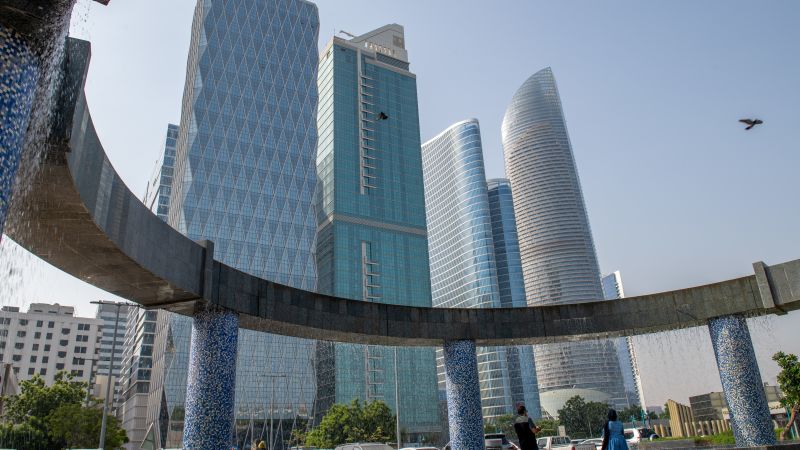
The United Arab Emirates (UAE) is establishing itself as a global leader in cryptocurrency adoption, boasting nearly 3 million users—approximately one-third of its population—making it the country with the highest cryptocurrency adoption rate worldwide. The UAE is not content merely to participate in the digital currency market; it aims to become recognized as a global crypto capital.
To this end, the UAE has implemented one of the most extensive regulatory frameworks for cryptocurrency while also launching a dirham-backed stablecoin this year. A landmark development occurred when the UAE authorized the first global license for Binance, the largest cryptocurrency exchange in the world, within the Abu Dhabi Global Market (ADGM), a special economic zone. This move signifies a new phase in the UAE’s commitment to cryptocurrency, providing assurance to global users that Binance will operate under the regulatory oversight of ADGM.
Richard Teng, CEO of Binance, emphasized the appealing environment for businesses and outlined the rigorous regulatory measures that have been in place for several years. He noted that the UAE’s financial markets are among the fastest-growing in the world and that the proactive regulatory approach makes it an attractive destination for crypto-related businesses.
Moreover, the UAE’s sovereign wealth funds, which are estimated to control around $2 trillion in assets, are making significant investments in decentralized digital finance. This strategy aims to diversify the economy, lessen the reliance on fossil fuels, and improve banking efficiency as well as cross-border transactions. Ronit Ghose, head of the Future of Finance at Citi Global Insights, remarked on the vibrant crypto and blockchain ecosystem emerging in cities like Dubai and Abu Dhabi.
While the UAE is leading the charge, other nations within the Gulf Cooperation Council (GCC) are also beginning to explore digital finance. Countries such as Saudi Arabia are focusing on blockchain technology, while Bahrain is positioning itself as a pioneer in crypto regulations. However, not all GCC nations share this enthusiasm; Oman, Qatar, and Kuwait have adopted a more cautious stance, with Qatar and Kuwait instituting bans on cryptocurrency and stablecoins.
The cryptocurrency market is known for its volatility, highlighted by Bitcoin’s recent journey from an all-time high of $126,000 to a drop below $81,000 in just a matter of weeks. Critics like Peter Schiff, chief global strategist at Euro Pacific Capital, argue that the valuation of cryptocurrencies is primarily speculative. Schiff has expressed concerns that government backing could legitimize what he perceives as a pyramid scheme, advocating instead for the use of blockchain technologies to create tokenized gold, which he views as having real intrinsic value.
Despite the volatility, Ghose underscored that regulatory oversight is critical for the mainstream adoption of cryptocurrencies. He expressed that regulation is not merely desirable but essential for ensuring the stability and credibility of the crypto market.