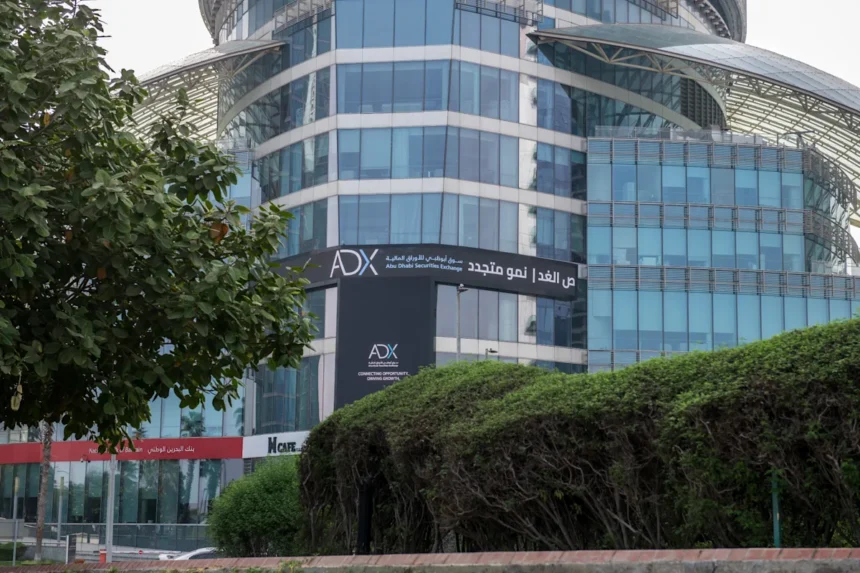
The United Arab Emirates has announced that it will temporarily close its two primary financial markets in response to escalating tensions in the region. The Abu Dhabi Securities Exchange and Dubai Financial Market will remain closed on March 2 and March 3, as stated by the UAE Capital Market Authority in an official email.
This decision follows a series of missile and drone attacks launched from Iran in retaliation against US and Israeli airstrikes. Since the assaults began on Saturday morning, the UAE has experienced hundreds of incoming threats, although a majority of these have been intercepted, resulting in minimal reported casualties or damage. However, the persistent attacks have incited fear among residents and pose a significant risk to the UAE’s economy, which has long prided itself on stability in finance, logistics, and tourism.
Analysts from Bloomberg Intelligence highlighted the potential repercussions on the UAE property market, suggesting that ongoing military actions could trigger demand shocks. They noted that the attacks threaten to disrupt the absorption of approximately 350,000 new property units, as well as impair tourism and retail footfall, with forecasts estimating a potential decline in the 120 million visitors expected at Dubai Mall.
With a market capitalization of $1.1 trillion, the UAE stock exchanges rank as the 19th largest globally and hold a 1.4% weight within MSCI Inc.’s emerging markets benchmark. The unusual nature of these market closures is underscored by the fact that UAE bourses usually only shut down during specified national mourning periods, such as following the death of President Sheikh Khalifa bin Zayed Al Nahyan in May 2022.
Historical precedents for market closures in times of unrest can be observed in other countries. For instance, Turkey suspended trading for a week following a devastating earthquake earlier this year, after which the market rebounded upon reopening. Russia’s stock market was halted for nearly a month after its invasion of Ukraine in 2022. In Greece, the Athens Stock Exchange was closed for five weeks during its sovereign debt crisis in 2015 and saw substantial declines when trading resumed.
As the situation unfolds, the UAE Capital Market Authority indicated its commitment to monitoring developments closely and reassessing the measures in response to changing conditions in the region.