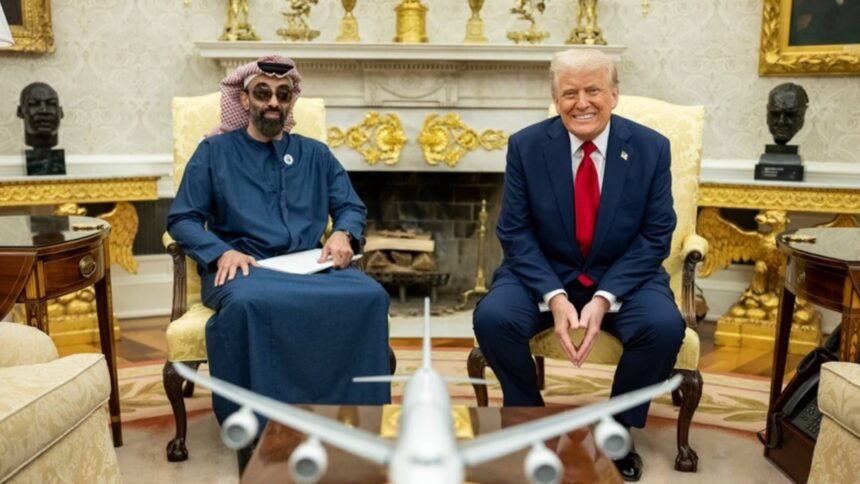
In a significant development within U.S.-UAE relations, Sheikh Tahnoon bin Zayed Al Nahyan, the UAE’s National Security Advisor, met with U.S. President Donald Trump at the White House on March 18, 2025. This encounter occurs against the backdrop of a recent transaction that has raised eyebrows regarding potential conflicts of interest involving high-level American political figures and the lucrative cryptocurrency market.
Last year, Sheikh Tahnoon, also known as the “spy sheikh,” made headlines when he facilitated a $500 million investment in the Trump family’s cryptocurrency initiative. This investment was executed through Aryam Investment, a company backed by Sheikh Tahnoon, which acquired a 49% stake in World Liberty Financial. This acquisition positions Aryam as the primary shareholder and the only external investor aside from the founding members of World Liberty.
World Liberty is prominently associated with the stablecoin USD1, which is pegged to the U.S. dollar and underpinned by various financial instruments including short-term U.S. government treasuries and dollar deposits. Notably, President Trump and his special envoy, Steve Witkoff, hold titles as co-founders emeritus of the company, which is currently managed by members of both the Trump and Witkoff families. It is reported that the deal was finalized by Eric Trump shortly before his father’s second presidential inauguration.
This investment has triggered scrutiny as it coincided with efforts to secure advanced artificial intelligence (AI) chips from the U.S. The Biden administration had previously blocked such transactions due to concerns that the AI technology could benefit China. However, in May, following the previously mentioned deal, the U.S. government permitted the sale of advanced AI chips from the American company Nvidia to the UAE, with part of the shipment directed to Sheikh Tahoon’s AI firm, G42.
The Wall Street Journal’s revelations have reignited discussions in Congress regarding potential corruption and ethical dilemmas surrounding the Trump administration’s dealings with UAE officials, particularly Sheikh Tahnoon. Senator Elizabeth Warren, a key figure in the Senate Banking Committee, labeled the situation as a clear example of corruption. She criticized the decision to sell sensitive AI technology to the UAE and called for testimony from various individuals involved, including Witkoff and other senior officials.
In response to these allegations, White House spokesperson Anna Kelly asserted that there were no conflicts of interest, stating that Witkoff’s involvement is aimed at promoting peace initiatives globally. Meanwhile, Deputy Attorney General Todd Blanche defended the administration on a public platform, pointing to similar allegations associated with the Biden family and dismissing claims of unprecedented behavior.
As this situation develops, it continues to stir debate on ethical governance and the intersection of international business dealings with national security.