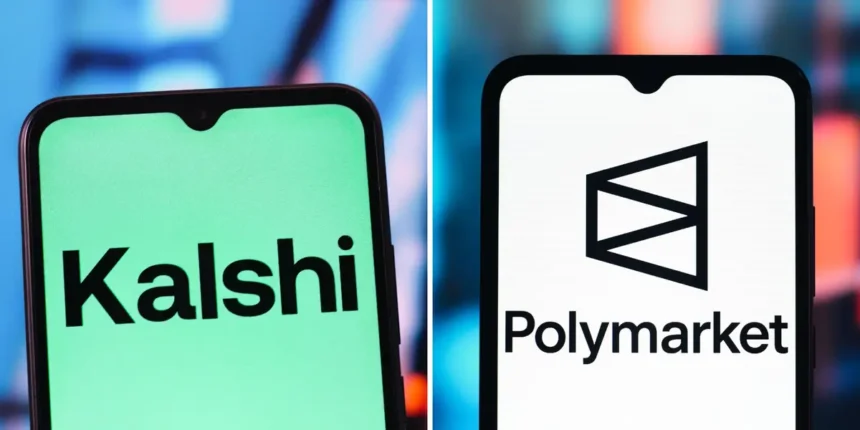
In the rapidly evolving world of prediction markets, Polymarket and Kalshi have emerged as two notable platforms, each offering unique features and user experiences. Although they both allow individuals to trade on the probabilities of real-world events, significant differences exist between the two that users should consider.
One of the most important distinctions is regulatory status. Kalshi operates under the jurisdiction of the Commodity Futures Trading Commission (CFTC), making it a fully regulated platform. This government oversight means that users can trade legally and with a sense of security. In contrast, Polymarket primarily runs an international platform that is not CFTC-regulated. Although the company has offices in New York, its operations are technically based in Panama. Recently, Polymarket announced a new US version called Polymarket US, which is CFTC-regulated, though it currently operates on an invitation-only basis and only offers sports contracts. For American users, this regulatory framework is crucial; while trading is legal on Kalshi, participating on Polymarket’s international platform is prohibited, leading many to use Virtual Private Networks (VPNs) to bypass restrictions.
Another key difference lies in how trading activity is conducted and reported. Polymarket utilizes cryptocurrency, specifically USD Coin pegged to the US dollar, facilitating public tracking of individual trades on the Polygon blockchain. Users can easily view details about others’ trades, including the timing and profit earned. Conversely, Kalshi maintains privacy for trades, which occur in regular US dollars. This difference has resulted in notable controversies surrounding Polymarket, especially when suspicious trades gain media attention. While the anonymity of Polymarket may attract users, it also raises concerns regarding potential insider trading, a point where Kalshi holds an advantage due to its requirement for users to provide personal identification.
Diversity of market offerings is yet another differentiator. Polymarket allows betting on a broader spectrum of topics, including politically sensitive issues like war and assassination. Kalshi, under the authority of CFTC regulations, is restricted from offering markets deemed contrary to public interest, leading to a more constrained range of options. Kalshi has notably highlighted these restrictions in its marketing campaigns, particularly in light of recent controversies and potential legislative scrutiny. An incident that involved partial payouts on bets related to the death of Iranian Supreme Leader Ali Khamenei highlighted the challenges of such regulatory oversight, as users were angered by the restrictions around “death markets.”
When it comes to market resolution processes, Kalshi and Polymarket employ contrasting methodologies. Kalshi adheres to a structured resolution process determined by predefined rules that specify the conditions under which a market resolves to “yes” or “no.” This structured approach provides clarity to users. In contrast, Polymarket employs a system called UMA Optimistic Oracle, where outcomes are determined through voting by cryptocurrency tokenholders. Although this may not significantly affect user experience, it can lead to discrepancies; for instance, instances where Kalshi and Polymarket disagree on event outcomes have arisen.
As these two platforms continue to grow and evolve, they represent distinct approaches to prediction markets, offering users a variety of options that cater to different preferences and risk tolerances. Understanding the nuances between Kalshi and Polymarket can empower traders to make informed choices in this burgeoning field.