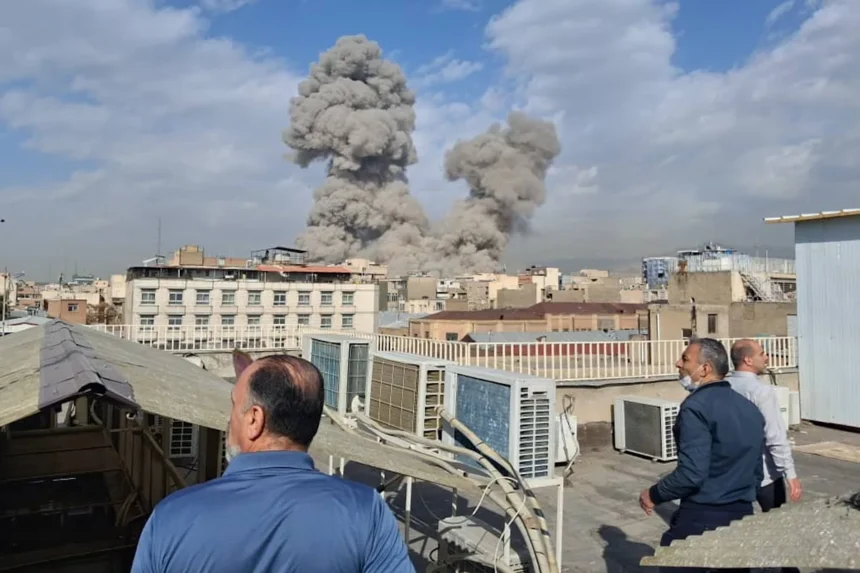
In a dramatic escalation of tensions, the United States and Israel executed a series of airstrikes targeting Iran early Saturday morning, aiming to dismantle the country’s nuclear program and potentially destabilize its government. President Trump announced on Truth Social that the Supreme Leader of Iran, Ayatollah Ali Khamenei, had been killed, though further details surrounding the strike remained scarce. This aggressive action swiftly prompted a retaliatory response from Iran, leading to fears of a broader conflict that could significantly impact global oil markets.
Market reactions were immediate, with Brent crude futures rising approximately 2.9% to above $72.80, while West Texas Intermediate (WTI) experienced a smaller increase of 2.8%, trading over $67 by the end of Friday. Analysts, including Jorge León from Rystad Energy, warned that should no deescalation occur over the weekend, oil prices could surge by $10 to $20 per barrel when trading resumes on Sunday night. León emphasized that Iran’s response over the next 24 to 72 hours would play a crucial role in determining the trajectory of oil prices, particularly regarding energy infrastructure and regional shipping dynamics.
The airstrikes, which reportedly included dozens aimed at Tehran and other major cities, followed failed diplomatic negotiations earlier in the week. Oman’s foreign minister, who acted as a mediator, expressed optimism on Face the Nation that progress had been made towards a potential agreement, contrasting sharply with the escalation of military action.
Iran’s retaliation was swift and broad, with missile strikes targeting U.S. military installations and allied infrastructure across several Gulf states, including Bahrain and the United Arab Emirates. Reports indicated that Riyadh and key oil-rich provinces in Saudi Arabia were also hit. Critical airports, including those in Kuwait, the UAE, and Saudi Arabia, experienced direct strikes as part of Iran’s response.
Within Tehran, U.S. forces targeted the compound housing Khamenei’s primary residence, escalating tensions further. The potential for rising oil prices looms large, with León indicating that a wider conflict could exacerbate the situation even more, pushing prices up substantially.
President Trump, reiterating the goals of the military operations, stated that the U.S. aims to dismantle Iran’s nuclear capabilities while also destabilizing the naval capabilities of the Iranian military and its support for regional terrorist groups. Following the escalation, the U.S. has deployed significant military assets to the Gulf, marking one of the largest military buildups in the region since the 2003 invasion of Iraq.
The Strait of Hormuz, a vital shipping route for global oil and natural gas supplies, has become a focal point in this conflict. Iran has exerted substantial influence over this waterway, with warnings issued by the Islamic Revolutionary Guard Corps to ships in the area. Historically, Iran has conducted attacks on oil tankers and laid mines, which could create severe disruptions and significant surcharges on oil and gas prices due to altered shipping routes.
In response to escalating tensions, several oil majors have suspended shipments through the Strait of Hormuz, sparking concern over supply chain stability. Previous military engagements have led to temporary oil price spikes, but analysts noted that Iran’s current retaliation appears broader in scope than earlier incidents.
With the OPEC+ cartel set to convene for its monthly meeting on Sunday, speculation arises regarding potential adjustments to production quotas, which could moderate the upward pressure on oil prices. As the situation continues to evolve, the geopolitical risks surrounding Iran’s oil production, which accounts for about 4% of the global supply, carry significant implications for both regional stability and global energy markets.
Trump urged Iranian forces to consider their future, framing the conflict as one where they must choose between surrender or facing “certain death,” while encouraging protests against the current regime. The unfolding events are poised to reshape not only Iranian dynamics but also the broader geopolitical landscape.