The US Dollar Index (DXY), which gauges the value of the US Dollar against six major currencies, is showing a slight decline after experiencing modest gains in the prior session. Currently, the DXY sits around 99.10 during the Asian trading hours on Wednesday, as traders prepare for vital economic indicators, including the US Retail Sales and Producer Price Index (PPI) data due later in the North American session.
In recent developments, the US Consumer Price Index (CPI) has broadly aligned with market expectations, suggesting the Federal Reserve (Fed) is likely to maintain its current policy stance this month. Even as some underlying price pressures hint at a cooling trend, the Greenback may still gain traction. The Consumer Price Index rose by 0.3% month-over-month in December 2025, aligning perfectly with market forecasts, while year-over-year inflation remained stable at a 2.7% increase, also meeting expectations. However, the Core CPI, which excludes food and energy prices, saw a smaller rise of 0.2% in December—falling short of predictions—though the annual rate is holding at 2.6%, which is a four-year low.
The recent CPI data has contributed to a clearer picture of easing inflationary pressures, particularly after previous reports were distorted due to various shutdown effects. Furthermore, a robust Nonfarm Payrolls report, along with a decrease in the unemployment rate, and a positive four-week average for ADP Employment Change have all pointed to a strong labor market, further bolstering the dollar’s position.
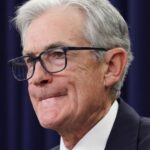
Nonetheless, any upside movement for the dollar may be tempered by rising concerns regarding the independence of the Federal Reserve. US federal prosecutors have indicated intentions to indict Fed Chair Jerome Powell over comments he made regarding a building renovation project, raising questions about the central bank’s operational autonomy. The Trump administration has been vocal in its pressure on the Fed, calling for interest rate cuts, while Powell has characterized the legal threat as a “pretext” potentially aimed at swaying monetary policy.
Traders are also maintaining a cautious outlook due to the increasing geopolitical tensions. Reports from the US-based HRANA rights group highlight a staggering death toll of 2,571 from ongoing protests in Iran. In response, US President Donald Trump has encouraged Iranians to persist in their protests, promising assistance in the near future.
The US Dollar (USD) serves as the official currency of the United States and is heavily adopted in numerous countries worldwide, often circulating alongside localized currencies. It holds the title of the most traded currency globally, with over 88% of all foreign exchange transactions involving the dollar, which translates to an average of $6.6 trillion in daily transactions.
Since the end of World War II, the US Dollar has eclipsed the British Pound as the world’s primary reserve currency. Historically, it was once backed by gold until the dissolution of the Gold Standard under the Bretton Woods Agreement in 1971.
Monetary policy, primarily shaped by the Federal Reserve, plays a pivotal role in determining the value of the US Dollar. The Fed’s dual mandates include achieving price stability and promoting full employment, with interest rate adjustments serving as its main tool. When inflation exceeds the target of 2%, the Fed may raise rates, typically leading to a stronger dollar. Conversely, if inflation drops below this threshold or the unemployment rate rises, the Fed may lower rates, which can negatively impact the dollar’s value.
In extreme economic scenarios, the Fed may resort to quantitative easing (QE)—a non-standard policy aimed at injecting liquidity into a struggling financial system. This involves increasing the money supply and purchasing government bonds, usually resulting in a weaker dollar. Alternatively, quantitative tightening (QT) is the process of halting bond purchases and allowing existing bond holdings to mature without reinvestment, which generally supports a stronger dollar.