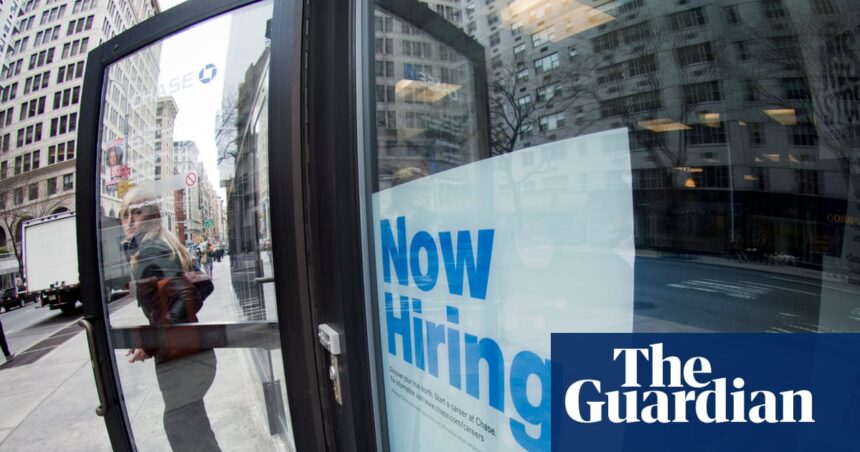
Companies, consumers, policymakers, and investors throughout the United States are facing significant uncertainty as the federal government shutdown continues to disrupt essential economic data reporting. This concern has been underscored by the absence of the much-anticipated jobs report, which was scheduled to be released on Friday. Despite the fact that the data for this report has already been collected, the Trump administration has refrained from publishing it, raising alarms about the ramifications for the nation’s economy.
Concerns about employment growth have intensified in recent months, highlighting a potential softening in the labor market. The situation worsened after Donald Trump dismissed the Bureau of Labor Statistics (BLS) commissioner in August, alleging—without substantiation—that labor market data had been manipulated. In the wake of this decision, both Erica Groshen, a former BLS commissioner during the Obama administration, and William Beach, who led the BLS under both Trump and Biden, have emphasized the critical nature of timely economic data.
Groshen articulated that the unavailability of the jobs report—and the subsequent inflation release, both of which have been fully prepared—leaves essential stakeholders “flying blind” at a potentially precarious juncture for the economy. She suggested that the inability to access this data compromises the decision-making capacity of the Federal Reserve, the U.S. Treasury, and various businesses and households, particularly as the nation grapples with signs that a recession might be looming.
Meanwhile, preliminary data from ADP, a private payroll processing company, indicated a surprising downturn in job counts for September. Rather than the anticipated growth of about 45,000 jobs, the report showed a loss of 32,000 jobs. This decline prompted a significant revision of August figures, which shifted from a gain of 54,000 jobs to a loss of 3,000.
Adding to the pressure, Paul Schroeder, executive director of the Council of Professional Associations on Federal Statistics, expressed the urgency of the situation. He noted that the monthly jobs report serves as a vital economic indicator, especially as economists attempt to gauge the cooling of the U.S. labor market. With the report’s delay, a crucial component of labor market analysis is missing, leaving analysts in the dark.
In response to the shutdown and the withholding of critical economic data, Democratic Senator Elizabeth Warren has vocally criticized the Trump administration, urging that the jobs report should be made public regardless of the ongoing federal impasse. Warren asserted that the collected data is essential for the Federal Reserve to make informed decisions about interest rates, decisions that ultimately affect American families across the country.
As the shutdown persists, the BLS has indicated that their contingency plan involves furloughing all employees except for the acting commissioner, effectively halting data collection and processing. An agency spokesperson confirmed that once funding is restored, normal operations and public communications regarding updates to the release schedule would resume.
Compounding these complications, Trump’s recent nominee to head the BLS, EJ Antoni, withdrew his nomination earlier this week following bipartisan criticisms regarding his qualifications and concerns over partisanship. This withdrawal leaves the bureau without a clear leader at a time when its operations are disrupted, further exacerbating concerns about the availability of crucial economic data.